Today's
EarthStation1.com 15% (Or More!) Off Commemorative Memorial Title:
Legacy With Michael Wood World History TV Series DVD, MP4, USB
Stick
Today, November 6, 2026
November 6-10, 2026: Diwali: -- Ashwayuja
27 or Ashwayuja 28 (Hindu Calendar, Amanta Tradition)/Kartika 12
or Kartika 13 (Hindu Calendar, Purnimanta Tradition) (Last Day
Before New Moon): Diwali (Deepawali, Divali, Festival Of Lights):
(Hindi: Diwali, from the Sanskrit Dipavali, "row or series of
lights', from the Sanskrit words dipa, 'lamp, light, lantern,
candle, that which glows, shines, illuminates or knowledge', and
avali, 'a row, range, continuous line, series') -- Diwali, the
Hindu festival of lights, with its variations also celebrated in
other Indian religions, is celebrated, and generally lasts five
days, beginning with day 1) Dhanteras, 2) Chhoti Diwali, 3) Diwali
(main celebration), 4) Govardhan Puja, and 5) Bhaiya Dooj. Diwali
is commonly celebrated in the honour of Lakshmi, the goddess of
wealth, fortune, power, beauty, fertility and prosperity,
associated with Maya ("Illusion") and along with Parvati
and Saraswati, she forms the Tridevi of Hindu goddesses, a trinity
of supreme divinity in Hinduism, joining a triad of eminent
goddesses either as a feminine version of the Trimurti (the
trinity of supreme divinity in Hinduism in which the cosmic
functions of creation, preservation, and destruction are
personified as the triad of deities of Brahma the creator, Vishnu
the preserver, and Shiva the destroyer, of which the Om symbol is
considered to be representative, the A, U, and M phonemes adding
up to represent Brahman, the highest universal principle, the
ultimate reality in the universe), or as consorts of a masculine
Trimurti, depending on the denomination. Diwali symbolises the
spiritual "victory of light over darkness, good over evil,
and knowledge over ignorance". Diwali is celebrated during
the Hindu lunisolar months of Ashvin (according to the Amanta
tradition) and Kartika - between around mid-September and
mid-November. Diwali is connected to various religious events,
deities and personalities, such as being the day Rama returned to
his kingdom in Ayodhya with his wife Sita and his brother
Lakshmana after defeating the demon king Ravana. It is also widely
associated with Lakshmi, the goddess of prosperity, and Ganesha,
the god of wisdom and the remover of obstacles. Other regional
traditions connect the holiday to Vishnu, Krishna, Durga, Shiva,
Kali, Hanuman, Kubera, Yama, Yami, Dhanvantari, or Vishvakarman.
Primarily a Hindu festival, variations of Diwali are also
celebrated by adherents of other faiths. The Jains observe their
own Diwali which marks the final liberation of Mahavira. The Sikhs
celebrate Bandi Chhor Divas to mark the release of Guru Hargobind
from a Mughal prison. Newar Buddhists, unlike other Buddhists,
celebrate Diwali by worshipping Lakshmi, while the Hindus of
Eastern India and Bangladesh generally celebrate Diwali by
worshipping the goddess Kali. During the festival, the celebrants
illuminate their homes, temples and workspaces with diyas (oil
lamps), candles and lanterns. Hindus, in particular, have a ritual
oil bath at dawn on each day of the festival. Diwali is also
marked with fireworks and the decoration of floors with rangoli
designs, and other parts of the house with jhalars. Food is a
major focus with families partaking in feasts and sharing mithai.
The festival is an annual homecoming and bonding period not only
for families, but also for communities and associations,
particularly those in urban areas, which will organise activities,
events and gatherings. Many towns organise community parades and
fairs with parades or music and dance performances in parks. Some
Hindus, Jains and Sikhs will send Diwali greeting cards to family
near and far during the festive season, occasionally with boxes of
Indian confectionery. Another aspect of the festival is
remembering the ancestors. Diwali is also a major cultural event
for the Hindu, Sikh, and Jain diaspora. The main day of the
festival of Diwali (the day of Lakshmi Puja) is an official
holiday in Fiji, Guyana, India, Malaysia, Mauritius, Myanmar,
Nepal, Pakistan, Singapore, Sri Lanka, Suriname, and Trinidad and
Tobago. On Sale Until Midnight Tonight PT!
https://store.earthstation1.com/legacy-with-michael-wood-world-history-tv-series-dvd-mp4-us4.html
Today's
EarthStation1.com 15% (Or More!) Off Commemorative Memorial Title:
Benny Carter: Symphony In Riffs DVD, Video Download, USB Flash
Drive
Today, November 6, 2026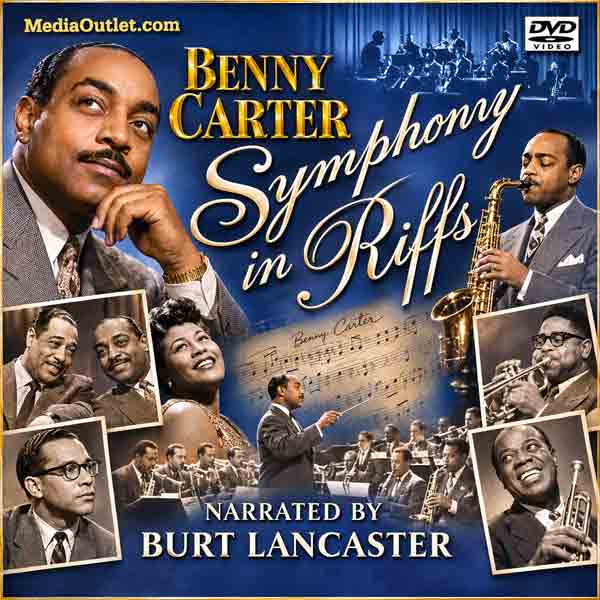
November 6: Saxophone Day: -- #BOTD:
#HBD! Adolphe Sax, Belgian inventor and musician who invented the
saxophone in the early 1840s, patenting it in 1846 (November 6,
1814 - February 4, 1894) is #born Antoine-Joseph in Dinant, France
(in what is now Belgium). A flute and clarinet player himself, he
invented the saxotromba, saxhorn and saxtuba. National Saxophone
Day commemorates the birth of this woodwind's inventor (saxophones
use a reed to produce sound, making it a woodwind instrument,
despite the instrument's brass construction). The saxophone is one
of the main instruments in jazz music. Adolphe Sax constructed
saxophones in several sizes in the early 1840s. On June 28, 1846,
he received a 15-year patent for the instrument. The patent
encompassed 14 different versions of the fundamental design, split
into two categories of seven instruments each and ranging from
sopranino to contrabass. After Sax's patent expired in 1866,
several saxophonists and instrument manufacturers implemented
their own improvements to the original design and key work.
Adolphe Sax died of pneumonia in Paris, France in poverty. He ias
interred in section 5 (Avenue de Montebello) at the Cimetiere De
Montmartre in Paris. Over the years, many great saxophone masters
have graced the world with their music, such as: Bird (Charlie
Parker), aka Yard Bird; Hawk (Coleman Hawkins); Prez (Lester
Young); Coltrane (John Coltrane); Benny Carter; Sonny Rollins;
Johnny Hodges; Cannonball (Julian Adderley); Paul Desmond; Gerry
Mulligan; Grover Washington Jr.; David Sanborn; Kenny G.; and many
many more! Ironically in light of his invention, Sax suffered from
lip cancer between 1853 and 1858; however, he did makee a full
recovery. He died of pneumonia in Paris, France in poverty, and
was interred in section 5 (Avenue De Montebello) at the Cimetiere
De Montmartre in Paris. On Sale Until Midnight Tonight PT!
https://store.earthstation1.com/benny-carter-symphony-in-riffs-dvd-burt-lancaster.html
Today's
EarthStation1.com 15% (Or More!) Off Commemorative Memorial Title:
Old Time Radio Children's Show MP3 MegaSet DVD, Download, USB
Stick
Today, November 6, 2026
November 6: Play Basketball Day: -- This
day celebrates one of the most popular sports in the United
States. Basketball is gaining popularity around the world, it's
played indoors or outdoors and it only requires a ball and a hoop.
Hoops are found in most parks and gyms. Play Basketball Day is a
day for all basketball fans to celebrate the impact that
basketball has globally. This festival commemorates the birthdate
of James Naismith, a Massachusetts physical education instructor
who devised basketball as a winter recreation for his students.
Basketball is among the most popular team sports on the planet.
National Basketball Day honors the founder of basketball, James
Naismith, on his birthday. Naismith was born in the Canadian city
of Almonte in 1861. Naismith moved to the United States to teach
physical education at the Y.M.C.A. International Training School
in Springfield, Massachusetts. His boss challenged him to come up
with a fair and non-aggressive indoor winter sport. Naismith
coined the term 'basketball' in December 1891. Naismith attached
fruit baskets to the ten-foot-high balcony at each end of the
Y.M.C.A.'s gymnasiums. He split his students into two groups and
instructed them to throw the ball into the baskets. Each team had
nine players in the first game, and they played with a soccer
ball. Basketball's first rulebook was created by Naismith, who
came up with 13 basic rules. Triangle, the publication of the
International Training School, published it on January 15, 1892.
Following its introduction in 1891, basketball quickly became
popular. The first public basketball game was played in 1892.
After the Y.M.C.A. began advertising it internationally in 1893,
the game spread to Y.M.C.A.s all over the world. In 1894, the
first basketball was released, which was larger than the original
soccer ball that was used. The National Basketball League, the
first professional league, was founded in 1898. Basketball was
first introduced in St. Louis, Missouri, as a demonstration sport
during the 1904's Summer Olympics. It was later introduced as an
official men's sport in Berlin, Germany, at the 1936 Summer
Olympics. In 1976, it was designated as a female Olympic sport.
Naismith died in Lawrence, Kansas, on November 28, 1939, aged 78.
"Basketball: Its Origin and Development" was published
after his death. Naismith was the inaugural inductee of the
Naismith Memorial Basketball Hall of Fame, which was founded in
Springfield, Massachusetts, in 1959. On Sale Until Midnight
Tonight PT!
https://store.earthstation1.com/old-time-radio-childrens-show-megaset-2-dual-layer-mp3-dvd-s23.html
Today's
EarthStation1.com 15% (Or More!) Off Commemorative Memorial Title:
The Machine That Changed The World: The Computer DVD MP4 Download
Today, November 6, 2026
November 6: National Ladies Learning Code
Day (Canada): -- It is an advocacy program in Canada for women and
the youth to learn about coding. Canada Learning Code started the
program to promote technology learning in Canada - especially
among women and other minority groups. National Ladies Learning
Code Day aims to provide access to information and skills required
to thrive in a digital world. Courses and workshops empower and
educate women and there are plenty of scholarships for women and
computer science scholarships available to help more women become
programmers. National Ladies Learning Code Day (also National Girl
Learning Code Day) aims to equip more people with coding skills,
tools, and resources. The ultimate goal is to drive innovation and
close the gender gap in the tech world. This national initiative
is the brainchild of the Canada Learning Code. It was established
primarily for women and female-identified persons. It offers a
socially welcoming and collaborative environment for them to learn
user experience design and coding. Canada Learning Code is at the
forefront of the digital literacy movement in Canada. In 2011,
Canada Learning Code was initially established as the Ladies
Learning Code. The organization has since expanded to cut across
programs such as Girls Learning Code, Kids Learning Code, and
Teens and Teachers Learning Code to reach a wider audience of
adults and adolescents. Canada Learning Code champions industry
and public partnerships, research, advocacy, and program design
and delivery in more than 35 communities across the nation. Well
over 250,000 learners have benefitted from in-person experiences
since the organization's inception. The charity prioritizes women,
indigenous youths, people with disabilities, and newcomers to the
field. This leading national organization works tirelessly to make
digital learning accessible to people all over the country. The
emphasis on closing the gender gap in the tech world is crucial
for the future of technology. In the modern world, products and
solutions must be crafted to represent the diversity of the
population that they serve. Whether it's building dummies for
safety features in vehicles or eliminating racial prejudice in
A.I. tools, the end goal must be an equitable digital future for
us all. On Sale Until Midnight Tonight PT!
https://store.earthstation1.com/the-machine-that-changed-the-world-the-computer-dvd-mp4-downloa4.html
Today's
EarthStation1.com 15% (Or More!) Off Commemorative Memorial Title:
Suleyman The Magnificent: Documentary On Suleiman I DVD, Download,
USB
Today, November 6, 2026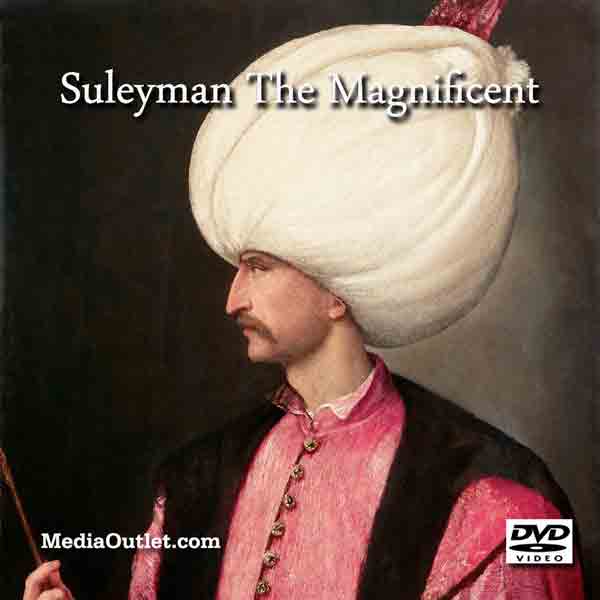
November 6, 1494: #BOTD: #HBD! Suleiman
I, also known as Suleyman I and as Suleiman The Magnificent,
Ottoman sultan (d. September 6, 1566) is #born in Trabzon in what
is now northeastern Turkey along the east coast of the Black Sea
to Sehzade Selim (later Selim I), probably on November 6, 1494,
although this date is not known with absolute certainty. He was
known as "Kanuni" (the Lawgiver) in his realm, and was
the longest-reigning sultan of the Ottoman Empire, ruling from
1520 to his death in 1566. Suleiman became a prominent monarch of
16th-century Europe, presiding over the apex of the Ottoman
Empire's economic, military and political power. Suleiman
personally led Ottoman armies in conquering the Christian
strongholds of Belgrade and Rhodes as well as most of Hungary
before his conquests were checked at the Siege Of Vienna in 1529.
He annexed much of the Middle East in his conflict with the
Safavids and large areas of North Africa as far west as Algeria.
Under his rule, the Ottoman fleet dominated the seas from the
Mediterranean to the Red Sea and through the Persian Gulf.
Suleiman personally instituted major legislative changes relating
to society, education, taxation and criminal law. His reforms,
carried out in conjunction with the empire's chief judicial
official Ebussuud Efendi, harmonized the relationship between the
two forms of Ottoman law; sultanic (Kanun) and religious (Sharia).
He was a distinguished poet and goldsmith; he also became a great
patron of culture, overseeing the "Golden" age of the
Ottoman Empire in its artistic, literary and architectural
development. Breaking with Ottoman tradition, Suleiman married
Hurrem Sultan, a woman from his harem, a Christian of Rusyn
(Russian) origin who converted to Islam, and who became famous in
the West by the name Roxelana. Their son Selim II succeeded
Suleiman following his death in 1566 after 46 years of rule.
Suleiman I died at the age of 71 at Szigetvar, Kingdom of Hungary,
Habsburg Monarchy, where Suleiman had set out to from
Constantinople to command Ottoman forces advancing in Hungary,
dying before an Ottoman victory at the Siege Of Szigetvar was
achived, a fact concealed by his Grand Vizier Sokollu Mehmed Pasha
during the Hungarian retreat until the enthronement of Suleiman's
successor, Selim II. The sultan's body was taken back to Istanbul
to be buried, while his heart, liver, and some other organs were
buried in Turbek, outside Szigetvar. A mausoleum constructed above
the burial site came to be regarded as a holy place and pilgrimage
site. Within a decade a mosque and Sufi hospice were built near
it, and the site was protected by a salaried garrison of several
dozen men. On Sale Until Midnight Tonight PT!
https://store.earthstation1.com/suleyman-the-magnificent-dvd-sultan-of-the-ottoman-empire.html
Today's
EarthStation1.com 15% (Or More!) Off Commemorative Memorial Title:
John Philip Sousa: His Life And Music DVD, MP4 Download, USB Drive
Today, November 6, 2026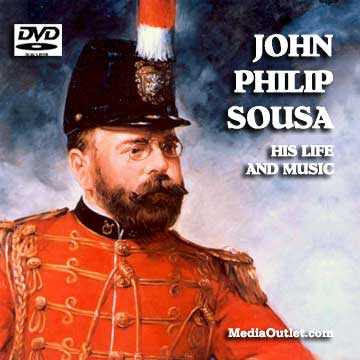
November 6, 1854: #BOTD: #HBD! John
Philip Sousa, American conductor and composer of the late Romantic
era known primarily for American military marches, and Freemason
(d. March 6, 1932) is #born in Washington, D.C.. He was the most
famous musician in the world in his day, when he was known as "The
March King" or the "American March King" (to
distinguish him from his British counterpart Kenneth J. Alford,
who is also known as "The March King"). His many popular
marches include "The Stars And Stripes Forever", "Semper
Fidelis", "The Liberty Bell", "El Capitan And
"The Washington Post". Sousa began his career playing
violin and studying music theory and composition under John Esputa
and George Felix Benkert. His father enlisted him in the United
States Marine Band as an apprentice in 1868. He left the band in
1875 and learned to conduct. From 1880 until his death, he focused
exclusively on conducting and writing music. He eventually
rejoined the Marine Band and served there for 12 years as
director, after which he organized his own band. Sousa aided in
the development of the sousaphone, a large brass instrument
similar to the helicon and tuba. On March 15, 1881, the "March
King" was initiated to the Scottish Rite Freemasonry in the
Hiram Lodge No. 10, Washington, DC and later became Master Mason
for 51 years. Upon the outbreak of World War I, Sousa was awarded
a wartime commission of lieutenant commander to lead the Naval
Reserve Band in Illinois. He then returned to conduct the Sousa
Band until his death of heart failure at age 77 in his room at the
Abraham Lincoln Hotel in Reading, Pennsylvania. He is buried at
The Congressional Cemetery in Washington, D.C.. On Sale Until
Midnight Tonight PT!
https://store.earthstation1.com/john-philip-sousa-his-life-and-music-dvd-mp4-download-usb-driv4.html
Today's
EarthStation1.com 15% (Or More!) Off Commemorative Memorial Title:
Abraham Lincoln (1930) D. W. Griffith Walter Huston DVD, Download,
USB
Today, November 6, 2026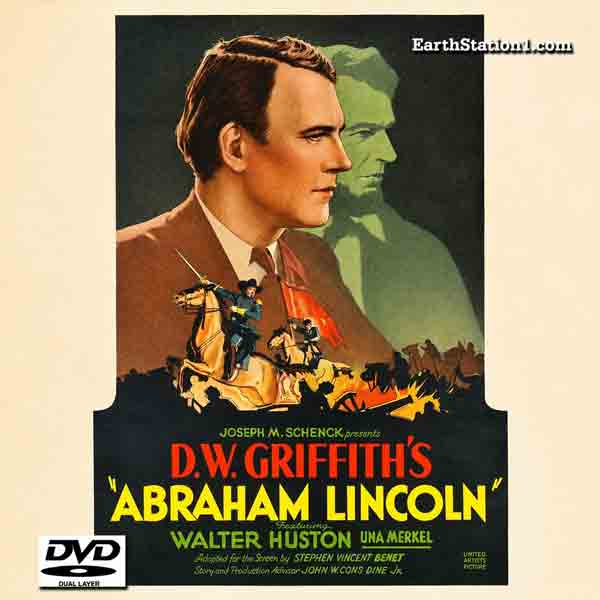
November 6, 1860: Elections: Elections In
The United States: The 1860 United States Presidential Election:
-- Abraham Lincoln is elected as the 16th U.S. President, and the
first Republican candidate to run or win the presidency, receiving
180 of 303 possible electoral votes and 40 percent of the popular
vote. The 1860 United States Presidential Election was the 19th
quadrennial presidential election. In a four-way contest, the
Republican Party ticket of Abraham Lincoln and Hannibal Hamlin
emerged triumphant. Lincoln's election served as the primary
catalyst of the American Civil War. The United States had become
increasingly divided during the 1850s over sectional
disagreements, primarily the extension of slavery into the
territories. The incumbent president, James Buchanan, like his
predecessor, Franklin Pierce, was a Northern Democrat with
sympathies for the South. During the mid-to-late 1850s, the
antislavery Republican Party became a major political force in the
wake of the Kansas-Nebraska Act and the Supreme Court's decision
in the 1857 case of Dred Scott v. Sandford. Starting in the 1856
United States presidential election and certainly by 1860, the
Republican Party had replaced the defunct Whig Party as the major
opposition to the Democrats. A group of former Whigs and Know
Nothings formed the Constitutional Union Party, which sought to
avoid secession by pushing aside the issue of slavery. The 1860
Republican National Convention, in Chicago, nominated Lincoln, a
moderate former one-term Representative from Illinois, as its
standard-bearer. Its platform promised not to interfere with
slavery in the Southern states but opposed the further extension
of slavery into the Western territories. The first 1860 Democratic
National Convention adjourned in Charleston, South Carolina,
without agreeing on a nominee, but a second convention in
Baltimore, Maryland, nominated Senator Stephen A. Douglas of
Illinois for president. Douglas's support for the concept of
popular sovereignty, which called for each territory to decide
itself on the status of slavery, alienated many Southern
Democrats. With the support of President Buchanan, the Southern
Democrats held their own convention and nominated Vice President
John C. Breckinridge of Kentucky for president. The 1860
Constitutional Union Convention nominated a ticket led by former
Senator John Bell of Tennessee. Despite minimal support in the
South (Lincoln's name was not on the ballot in 10 Southern
states), he won a plurality of the popular vote (40%) and a
majority of the electoral vote. However, the divisions of the
Republicans' opponents were not in themselves decisive in ensuring
the Republican capture of the White House, as Lincoln received
absolute majorities in states that combined for a majority of the
electoral votes. Lincoln's main opponent in the North was Douglas,
who finished second in several states but won only the slave state
of Missouri and three electors from the free state of New Jersey.
Bell won three Southern states, and Breckinridge swept the
remainder of the South. The election of Lincoln led to the
secession of seven states in the South before the inauguration and
the outright secession of four more (plus the partial secession of
two others) once the Civil War began with the Battle of Fort
Sumter. The election was the first of six consecutive victories
for the Republican Party. On Sale Until Midnight Tonight PT!
https://store.earthstation1.com/abraham-lincoln-dual-layer-dvd-d-w-griffith-walter-huston.html
Today's
EarthStation1.com 15% (Or More!) Off Commemorative Memorial Title:
Jefferson Davis Biography Documentary MP4 Download DVD
Today, November 6, 2026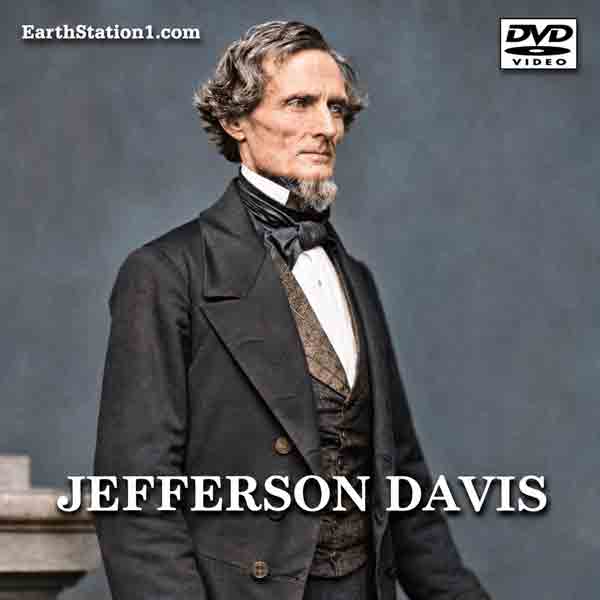
November 6, 1861: Elections: Elections In
The Confederate States: The Confederate States Presidential
Election: -- Jefferson Davis, having served since February as the
provisional president, is elected to a full six-year term as
President of the Confederate States of America. Alexander H.
Stephens won as Vice President. Davis and Stephens ran without
opposition. The election effectively confirmed the decision that
had been made to select Davis and Stephens for their positions by
the Provisional Confederate Congress earlier in the year. Davis
remained president until May 5, 1865, when the Confederate
government was officially dissolved. The Provisional Confederate
States Congress had met at Montgomery, Alabama, on February 4,
1861. A provisional constitution was adopted on February 8, 1861.
On February 9, 1861, Jefferson Davis was elected Provisional
President and Alexander H. Stephens was elected Provisional Vice
President by the Confederate Congress. Stephens took office on
February 11 and Davis took office on February 18, 1861. On March
11, 1861, a permanent Constitution was adopted. The Confederate
States Presidential Election of November 6, 1861 was the only
presidential election held under the Permanent Constitution of the
Confederate States of America. Jefferson Davis, who had been
elected president and Alexander H. Stephens, who had been elected
vice president, under the Provisional Constitution, were elected
to six-year terms (February 22, 1862 - February 22, 1868) as the
Confederate States' first permanent president and vice president.
On Sale Until Midnight Tonight PT!
https://store.earthstation1.com/jefferson-davis-biography-documentary-mp4-download-dvd.html
Today's
EarthStation1.com 15% (Or More!) Off Commemorative Memorial Title:
The Russian Revolution Documentary Set MP4 Video Download Or DVD
Today, November 6, 2026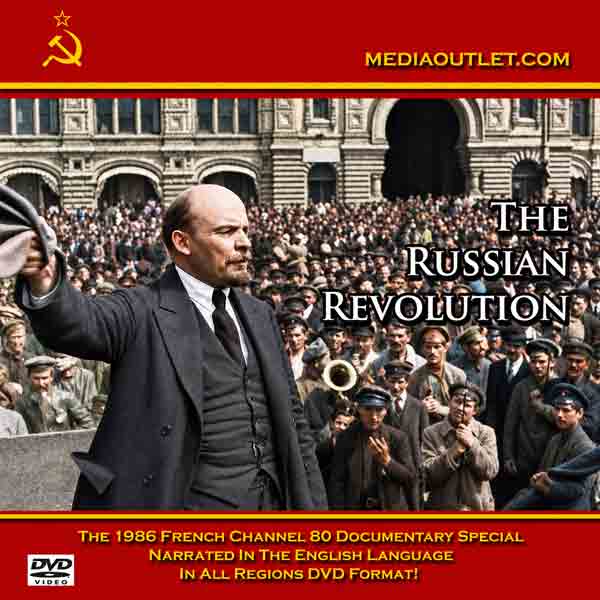
November 6 (NS; October 24 OS), 1917: The
Aftermath Of World War I: 20th Century Revolutions: The
Revolutions Of 1917-1923: The Interwar Period (The Aftermath Of
World War I, The Interbellum, Between The Wars): The Russian
Revolution: The Soviet Union (The Union Of Soviet Socialist
Republics, USSR): The History Of The Soviet Union: The Russian
Civil War: Opposition To World War I: The October Revolution (The
Great October Socialist Revolution, The Bolshevik Revolution, Red
October) -- Bolshevik Red Guards under the Military Revolutionary
Committee began the takeover of government buildings in Russia,
among the first events associated with the October Revolution. The
following day, the Winter Palace (the seat of the Provisional
government located in Petrograd, then capital of Russia), is
captured. The day prior, November 5 (New Style; October 23 Old
Style), 1917, Lenin called for the October Revolution, officially
known in Soviet literature as the Great October Socialist
Revolution, and commonly referred to as Red October, the October
Uprising, the Bolshevik Revolution,. or Bolshevik Coup. It was a
revolution in Russia led by the Bolsheviks led by Vladimir Lenin
that was instrumental in the larger Russian Revolution of 1917. It
took place with an armed insurrection in Petrograd on the 25th of
October (7 November, New Style) 1917. The revolution was led by
the Bolsheviks, who used their influence in the Petrograd Soviet
to organize the armed forces. Bolshevik Red Guards forces under
the Military Revolutionary Committee began the occupation of
government buildings on October 25 (Old Style; November 7, 1917
New Style). The following day, the Winter Palace (the seat of the
Provisional government located in Petrograd, then capital of
Russia), was captured. On Sale Until Midnight Tonight PT!
https://store.earthstation1.com/great-days-of-the-century-the-russian-revolution-dvd.html
Today's
EarthStation1.com 15% (Or More!) Off Commemorative Memorial Title:
Remember When: On The Air Radio History w/Dick Cavett DVD Download
USB
Today, November 6, 2026
November 6, 1935: Broadcasting: The
History Of Broadcasting: Radio: The History Of Radio Broadcasting:
FM: FM Radio: The History Of FM Radio: -- Edwin Armstrong presents
his paper "A Method of Reducing Disturbances in Radio
Signaling by a System of Frequency Modulation" to the New
York section of the Institute of Radio Engineers. That method is
now known as FM radio. The paper was published in 1936. As the
name implies, wideband FM (WFM) requires a wider signal bandwidth
than amplitude modulation by an equivalent modulating signal; this
also makes the signal more robust against noise and interference.
Frequency modulation is also more robust against
signal-amplitude-fading phenomena. As a result, FM was chosen as
the modulation standard for high frequency, high fidelity radio
transmission, hence the term "FM radio" (although for
many years the BBC called it "VHF radio" because
commercial FM broadcasting uses part of the VHF band-the FM
broadcast band). FM receivers employ a special detector for FM
signals and exhibit a phenomenon known as the capture effect, in
which the tuner "captures" the stronger of two stations
on the same frequency while rejecting the other (compare this with
a similar situation on an AM receiver, where both stations can be
heard simultaneously). However, frequency drift or a lack of
selectivity may cause one station to be overtaken by another on an
adjacent channel. Frequency drift was a problem in early (or
inexpensive) receivers; inadequate selectivity may affect any
tuner. An FM signal can also be used to carry a stereo signal;
this is done with multiplexing and demultiplexing before and after
the FM process. The FM modulation and demodulation process is
identical in stereo and monaural processes. A high-efficiency
radio-frequency switching amplifier can be used to transmit FM
signals (and other constant-amplitude signals). For a given signal
strength (measured at the receiver antenna), switching amplifiers
use less battery power and typically cost less than a linear
amplifier. This gives FM another advantage over other modulation
methods requiring linear amplifiers, such as AM and QAM. FM is
commonly used at VHF radio frequencies for high-fidelity
broadcasts of music and speech. Analog TV sound is also broadcast
using FM. Narrowband FM is used for voice communications in
commercial and amateur radio settings. In broadcast services,
where audio fidelity is important, wideband FM is generally used.
In two-way radio, narrowband FM (NBFM) is used to conserve
bandwidth for land mobile, marine mobile and other radio services.
There are reports that on October 5, 1924, Professor Mikhail A.
Bonch-Bruevich, during a scientific and technical conversation in
the Nizhny Novgorod Radio Laboratory, reported about his new
method of telephony, based on a change in the period of
oscillations. Demonstration of frequency modulation was carried
out on the laboratory model. On Sale Until Midnight Tonight PT!
https://store.earthstation1.com/remember-when-on-the-air-dvd-us-radio-history-dick-cavett.html
Today's
EarthStation1.com 15% (Or More!) Off Commemorative Memorial Title:
Murder In Mississippi: Freedom Summer Murders Informants DVD MP4
USB
Today, November 6, 2026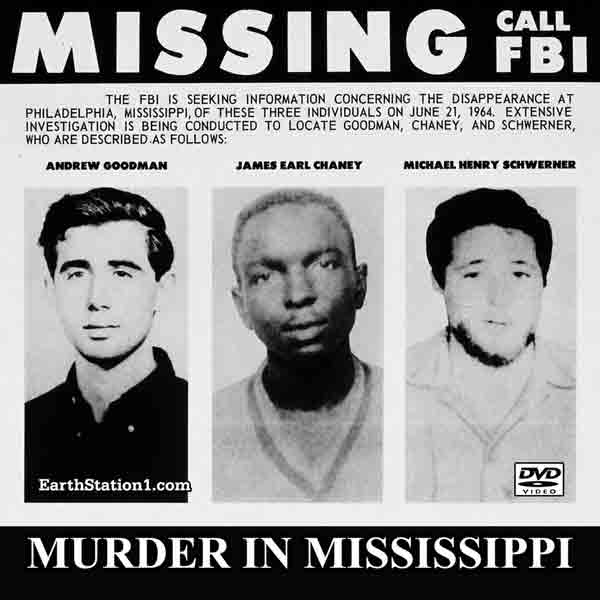
November 6, 1939: #BOTD: #HBD! Michael
Schwerner, American civil rights activist, one of three Congress
Of Racial Equality (CORE) field workers murdered in rural Neshoba
County, Mississippi, by members of the Ku Klux Klan (d. June 21,
1964) is #born Michael Henry Schwerner in Pelham, New York into
the Jewish family Anne Siegel (May 1, 1912 - November 29, 1996), a
science teacher at nearby New Rochelle High School, and Nathan
Schwerner (June 19, 1909 - March 6, 1991), a businessman.
Schwerner attended Pelham Memorial High School in Pelham, New
York, a suburban town approximately 10 miles northeast of Midtown
Manhattan in Westchester County. As a boy, Schwerner befriended
Robert Reich, who later became U.S. Secretary of Labor. Schwerner
helped protect Reich, who was smaller, from bullies. Schwerner was
called Mickey by his friends. He attended Michigan State
University, originally intending to become a veterinarian. He
transferred to Cornell University and switched his major to rural
sociology. While an undergraduate at Cornell, he was initiated
into the school's chapter of Alpha Epsilon Pi fraternity. He
entered graduate school at the School of Social Work at Columbia
University. In the early 1960s Schwerner became active in working
for civil rights for African Americans; he led a local Congress of
Racial Equality (CORE) group on the Lower East Side of Manhattan,
called "Downtown CORE." He participated in a 1963 effort
to desegregate Gwynn Oak Amusement Park in Maryland. As activism
increased in the South, Schwerner, recruited by John Lewis, and
his wife, Rita Schwerner Bender, volunteered to work for National
CORE in Mississippi, under the tutelage of Dave Dennis, the CORE
state director. Bob Moses assigned the Schwerners to organize the
community center and activities in Meridian. James Chaney was a
local youth who started working with them there. The Schwerners
were the first whites to be assigned by CORE permanently outside
the state capital of Jackson. In the summer of 1964 CORE intended
to hold classes and drives to register African Americans to vote
in the state, what they called "Freedom Summer". Many
volunteers, mostly college students and young adults, had been
recruited from local communities and northern/western states to
work on this project. Civil rights activists were resented and
held under suspicion by white Mississippians. Spies paid by the
Mississippi State Sovereignty Commission, a taxpayer-funded
agency, kept track of all northerners and suspected activists. The
Commission conducted economic boycotts and intimidation against
activists. In 1998 its records were opened by court order,
revealing the state's deep complicity in the 1964 murders of three
civil right workers because its investigator, A. L. Hopkins,
passed on information about the workers, including their car
license number, to the commission. Records showed the Commission
passed the information on to the Sheriff of Neshoba County,
Lawrence Rainey, who was implicated in the murders. The Ku Klux
Klan targeted Schwerner after he and his wife, Rita, had taken
over the Meridian CORE field office, where they established a
community center for blacks as part of grassroots organizing.
Schwerner tried to establish contact with white working-class
citizens of Meridian and went door-to-door to speak with them. He
also organized a black boycott of a popular variety store until it
hired its first African American, under the principle of "don't
shop where you can't work". On June 21, 1964, The Murders Of
Chaney, Goodman, And Schwerner (The Freedom Summer Murders, The
Mississippi Civil Rights Workers' Murders, The Mississippi Burning
Murders) took place when Schwerner and two other civil rights
workers, white Andrew Goodman and James Chaney, were abducted and
murdered in Neshoba County, after they left Meridian, Mississippi,
at 9 a.m. to investigate a church burning. They were expected back
by 4 p.m. When they failed to return, a search was begun. Their
murdered bodies were discovered on August 4. The victims were
James Chaney from Meridian, Mississippi, and Andrew Goodman and
Michael Schwerner from New York City. All three were associated
with the Council of Federated Organizations (COFO) and its member
organization, the Congress Of Racial Equality (CORE). They had
been working with the Freedom Summer campaign by attempting to
register African Americans in Mississippi to vote. This
registration effort was a part of contesting over 70 years of laws
and practices that supported a systematic policy, begun by several
states in 1890, of disenfranchisement of potential black voters.
The three men had traveled from Meridian to the community of
Longdale to talk with congregation members at a black church that
had been burned. The trio was thereafter arrested by Neshoba
County Deputy Sheriff Cecil Price following a traffic stop outside
Philadelphia, Mississippi for speeding, escorted to the local
jail, and held for a number of hours. As the three left town in
their car, they were followed by law enforcement and others.
Before leaving Neshoba County, the car was pulled over and all
three were abducted, driven to another location, and shot at close
range. The three men's bodies were then transported to an earthen
dam where they were buried. The disappearance of the three men was
initially investigated as a missing persons case. The civil rights
workers' burnt-out car was found near a swamp three days after
their disappearance. An extensive search of the area was conducted
by the Federal Bureau of Investigation (FBI), local and state
authorities, and four hundred United States Navy sailors. The
three men's bodies were only discovered two months later thanks to
a tip-off. During the investigation it emerged that members of the
local White Knights of the Ku Klux Klan, the Neshoba County
Sheriff's Office and the Philadelphia Police Department were
involved in the incident. The murder of the activists sparked
national outrage and an extensive federal investigation, filed as
Mississippi Burning (MIBURN), which later became the title of a
1988 film loosely based on the events. Michael Schwerner's remains
were cremated, and the ashes given to his widow Rita. In 1967,
after the state government refused to prosecute, the United States
federal government charged eighteen individuals with civil rights
violations. Seven were convicted and received relatively minor
sentences for their actions. Outrage over the activists'
disappearances helped gain passage of the Civil Rights Act Of
1964. In 2024, Robert Reich, Secretary of Labor under President
Bill Clinton, revealed on Twitter that Michael Schwerner had been
his "guardian angel" against bullies when they attended
John Jay High School in Lewisboro, New York. Reich cites this
event as an inspiration to "fight the bullies, to protect the
powerless, to make sure that the people without a voice have a
voice". #MichaelSchwarner #CORE #CongressOfRacialEquality
#AfricanAmericanCivilRightsMovement #WhiteKnightsOfTheKuKluxKlan
#KKK #MurdersOfChaneyGoodmanAndSchwerner #FreedomSummerMurders
#MississippiCivilRightsWorkersMurders #MississippiBurningMurders
#JamesChaney #AndrewGoodman #NeshobaCountyMI #FreedomSummer #COFO
#CouncilOfFederatedOrganizations #NeshobaCountySheriffsOffice
#CecilPrice #EdgarRayKillen #PhiladelphiaMIPoliceDepartment #FBI
USNavy #CivilRightsActOf1964 #VotingRightsActOf1965 #Mississippi
#MP4 #VideoDownload #DVD On Sale Until Midnight Tonight PT!
https://store.earthstation1.com/murder-in-mississippi-freedom-summer-murders-informants-dvd-mp4-us4.html
Today's
EarthStation1.com 15% (Or More!) Off Commemorative Memorial Title:
Monster: A Portrait Of Stalin In Blood TV Series DVD, Download,
USB
Today, November 6, 2026
November 6, 1941: The European Civil War:
World War II: The Second European War (The European Theater Of
World War II): The Eastern Front Of World War II: The Great
Patriotic War (The German-Soviet War): Operation Barbarossa: The
Battle Of Moscow: -- On the eve of the Russian Day Of Military
Honour of November 7, when the troops that took part in the annual
parade were sent from the Red Square directly to the front line
less than 100 KM away, Joseph Stalin broadcasts a radio address to
the Soviet people for only the second time. In preparation for a
major military parade the following day in Moscow marking the
anniversary of the October Revolution, Stalin's peculiar radio
broadcast is delivered at the celebration meeting of the Moscow
Soviet of Working People's Deputies and Moscow Party Public
Organizations. Stalin's last such address was on July 3, 1941 when
he vowed to fight Hitler to the end. The situation had only gotten
much worse since July, and the German panzers at the time of this
speech were positioned around Moscow in three major directions
(northwest, west, and south). Stalin begins the long speech in a
remarkably mundane fashion (given the circumstances) by noting
"successes in the realm of peaceful construction for the past
year," but quickly switches to the "war with the German
invaders who perfidiously attacked our peace-loving country."
He calls the conflict a "war of liberation" and then
says he will "sum up the results of the war for the second
half of the past year" - as if he is about to go over a
financial statement at a corporation. Soviet media throughout
World War II is never very forthcoming and always remains
ambiguous about areas that have been lost. in this way, the
situation is completely alien to foreign listeners who have media
that do report such facts. It is typical for Soviet state media
(and it is all state media) to say merely that there is "fighting
in the direction of" a certain place. Savvy listeners (such
as British war correspondent Alexander Werth, listening in Moscow)
understand such references to mean that the place mentioned has
been lost - even though the media never actually admit to that.
So, when Stalin gives a precise list of places lost, it is the
first time that the Soviet state actually admits to these defeats.
Stalin says: "The enemy has seized a large part of the
Ukraine, Byelorussia, Moldavia Lithuania, Latvia, Esthonia and a
number of other regions, has forced his way into the Donetz Basin,
hangs like a black cloud over Leningrad and is threatening our
glorious capital, Moscow." This is a very accurate summary of
the situation - though Stalin does not mention the Crimea or
territory lost to Finland. What he lists is bad enough and a rare
dose of honesty for the Soviet people. Stalin also gives precise
casualty figures, but these seem a bit fanciful and the product of
wishful thinking: "In four months of war we have lost 350,000
in killed, and 378,000 missing, and our wounded number 1,020,000.
In the same period the enemy has in killed, wounded and prisoners
lost more than four and a half million men." While German
losses have indeed been heavy, they are nowhere near four million
men - which is a million soldiers more than the Wehrmacht began
the war with. Soviet losses at Kyiv alone totaled roughly the
numbers that Stalin gives for killed and missing for the entire
conflict to date. Certainly, Stalin has better information than
this available to him, but it sounds better to say that German
losses exceed Soviet losses when the reverse is true. After noting
that the Germans "gravely miscalculated," which
absolutely appears to have been true, Stalin concludes with a
somewhat backhanded plea for more help from his allies. He notes
that "there are a number of factors unfavorable to the Red
Army," which at first glance seems like an amazing admission,
but which immediately turns into an implied accusation that the
Allies are not doing their fair share of the fighting. Stalin
argues: "One of the reasons for the reverses of the Red Army
is the absence of a second front in Europe against the
German-fascist troops. The fact of the matter is that at the
present time there are still no armies of Great Britain or the
United States of America on the European continent to wage war
against the German-fascist troops, with the result that the
Germans are not compelled to dissipate their forces and to wage
war on two fronts, in the West and in the East. Well, the effect
of this is that the Germans, considering their rear in the West
secure, are able to move all their troops and the troops of their
allies in Europe against our country." Then, Stalin
completely omits the help that the Allies actually are giving the
Soviet Union, which is Lend-Lease supplies. After noting that "the
Germans are producing considerably more tanks," he says:
"There is only one way of nullifying the Germans' superiority
in tanks and thus radically improving the position of our army.
This way is, not only to increase the output of tanks in our
country several times over, but also sharply to increase the
production of anti-tank aircraft, anti-tank riffles and guns, and
anti-tank grenades and mortars, and to construct more anti-tank
trenches and every other kind of anti-tank obstacle." It is a
jaw-dropping exercise in blame-shifting by Stalin. Although
Germany is invading, the root cause of the USSR's troubles, Stalin
very strongly implies, is the failure of the Western Allies to
help out. Not only is there no second front, but they aren't
giving any other help, either (at least according to this speech).
This curious anti-Western attitude is one that Stalin will retain
throughout the war and in the post-war years as well. Thus, this
speech of November 6, 1941 casts a very long shadow that extends
well past 1945. On Sale Until Midnight Tonight PT!
https://store.earthstation1.com/monster-a-portrait-of-stalin-in-blood-dvd-tv-series-2-disc2.html
Today's
EarthStation1.com 15% (Or More!) Off Commemorative Memorial Title:
China In Revolution 1911-1949 TV Series DVD, Download, USB Flash
Drive
Today, November 6, 2026
November 6, 1948: China: The History Of
China: The Century Of Humiliation (The Hundred Years Of National
Humiliation) (1838-1945): The Chinese Civil War: The Huaihai
Campaign (The Battle Of Hsupeng): -- The largest operational
campaign of the Chinese Civil War begins as the Chinese Communist
Party's People's Liberation Army (PLA), led by Deputy
Commander-On-chief of the Eastern China Field Army General Su Yu,
launches a major offensive against the Chinese Nationalist Army's
seven different armies defending the Kuomintang headquarters, the
General Suppression Headquarters of Xuzhou Garrison in Xuzhou,
Jiangsu province, China that ends on January 10, 1949 when the PLA
reaches north of the Yangtze. The Huaihai Campaign (Chinese:
Huaihai Zhanyi), or (Chinese: Xubeng Huizhan), was one of the
military conflicts in the late stage of the Chinese Civil War
between the Kuomintang and the Communist Party of China. The
Huaihai Campaign was a decisive battle of the Chinese Civil War
carried out in three phrases over three months, and fought in
Shandong, Jiangsu, Anhui, and Henan. On Sale Until Midnight
Tonight PT!
https://store.earthstation1.com/china-in-revolution-19111949-dvd-2-part-tv-documenta191119492.html
Today's
EarthStation1.com 15% (Or More!) Off Commemorative Memorial Title:
Nuclear War Films #14 Operations Cannikin, Plowshare DVD Download
USB
Today, November 6, 2026
November 6, 1971: The Aftermath Of World
War II: The Cold War: Nuclear Warfare: Nuclear Weapons Testing:
American Nuclear Warfare: American Nuclear Weapons Testing:
Operation Grommet: Cannikin Test: -- The United States Atomic
Energy Commission tests the largest U.S. underground hydrogen
bomb, code-named Cannikin, on Amchitka Island in the Aleutians; it
unintentionally is responsible for the creation of the
environmental organization Greenpeace. Cannikin was an underground
nuclear weapons test performed on November 6, 1971, on Amchitka
island, Alaska, by the United States Atomic Energy Commission. The
experiment, part of the Operation Grommet nuclear test series,
tested the unique W71 warhead design for the LIM-49 Spartan
anti-ballistic missile. With an explosive yield of almost 5
megatons of TNT (21 PJ), the test was the largest underground
explosion ever detonated by the United States. Prior to the main
five-megaton test in 1971, a 1 Mt (4.2 PJ) test took place on the
island on October 2, 1969, for calibration purposes, and to ensure
the subsequent Cannikin test could be contained. This test,
Milrow, was included in the Operation Mandrel nuclear test series.
The Cannikin test faced considerable opposition on environmental
grounds. The campaigning environmental organization Greenpeace
grew out of efforts to oppose the test. The Cannikin test was too
large to be conducted safely in Nevada. Amchitka had been
considered in the 1950s as a potential nuclear test site, but had
been deemed unsuitable at that time. In 1965, a single nuclear
test, Long Shot, was carried out on the island for the purposes of
seismic test detection development, under program Vela Uniform.
Preparation for the test took place over five years and involved
hundreds of staff from the Lawrence Radiation Laboratory, later
the Lawrence Livermore National Laboratory. Drilling for the shaft
for the Milrow test began in March 1967, with drilling for the
Cannikin test commencing in August 1967. To perform the test, 400
tons of equipment was placed in a shaft 1,870 metres (6,150 ft)
deep and 2.3 metres (90 in) wide. Test support equipment was
designed to survive a ground upheaval of 4.6 metres (15 ft) at
test time. The chairman of the Atomic Energy Commission, James R.
Schlesinger, brought his wife and two daughters to Amchitka for
the test to emphasize the safety of the test. Both the 1969
calibration test and Cannikin itself attracted protest. Because of
the 1964 Alaska earthquake, the plans raised concerns that tests
might trigger earthquakes and cause a tsunami. A 1969
demonstration of 7,000 people blocked a major U.S.-Canada border
crossing in British Columbia, carrying signs reading "Don't
Make A Wave. It's Your Fault If Our Fault Goes". Further
demonstrations occurred at Canada-US border crossings in Ontario
and Quebec. The Canadian Don't Make a Wave Committee, founded that
year in Vancouver, attempted to halt further nuclear testing on
the Aleutian islands chain. With the intention of sailing to
Amchitka to protest the 1971 test, the committee chartered a ship
it renamed Greenpeace. The ship was turned back by the U.S. Coast
Guard. However, under this name, the organization created for the
protest continued to exist as the campaigning environmental
organization Greenpeace. In July 1971, the anti-nuclear Committee
for Nuclear Responsibility filed suit against the Atomic Energy
Commission, asking the court to stop the test. The suit was
unsuccessful, with the Supreme Court denying the injunction by 4
votes to 3. The test was carried out and did not cause a tsunami
as feared. On Sale Until Midnight Tonight PT!
https://store.earthstation1.com/nuclear-war-films-14-dvd-operations-cannikin-amp-plowsha14.html
Today's
EarthStation1.com 15% (Or More!) Off Commemorative Memorial Title:
Jim Hawthorne Radio Shows MP3 Set DVD, Audio Download, USB Flash
Drive
Today, November 6, 2026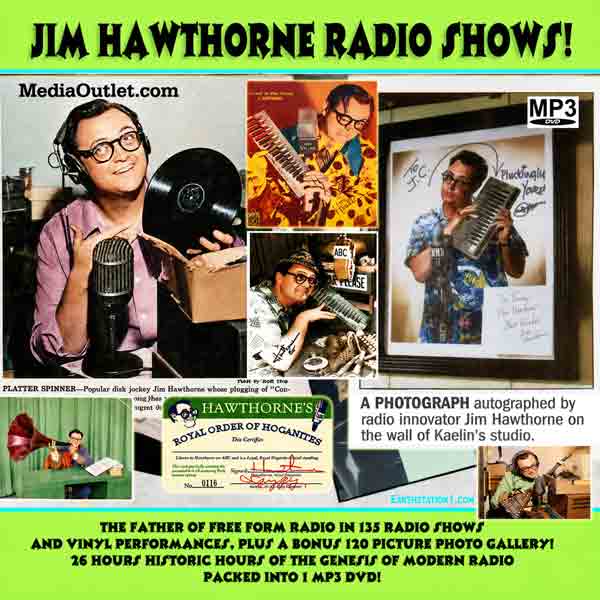
( #JCKaelin here: I became friends with
Jim Hawthorne in his final years. You can read about our
friendship in the description of the below listed MP3 title. Those
years were some of the best of my life :) . Thanks Jim! )
========= November 6, 2007: #DOTD: #RIP: Jim Hawthorne, American
disc jockey, radio and television personality, and comic actor,
originator and pioneer of "free form" radio (b. November
20, 1918) #dies of congestive heart disease in Santa Barbara,
California at the age of 88. His burial details are not publicly
disclosed. Hawthorne was born in Victor, Colorado. He began his
career at a Denver radio station. He gained national attention for
his broadcasts on Pasadena, California, station KXLA in 1947.
While in Los Angeles, he also worked in early television and short
films. He also issued his own records such as "Turn Your
Head, Sweetheart". Hawthorne moved to Hawaii in the late
1960s and developed the popular Checkers and Pogo children's show,
which ran from 1967 to 1982 (long after he passed the role of
"Checkers" to other actors). In 1950, he created,
produced and starred in the Saturday night coast-to-coast radio
program, The Hawthorne Thing, which was the final network radio
show to originate in NBC's Hollywood Radio City. At KLAC/Channel
13 in the early 1950s, he created the first late evening talk show
on television, This Is Hawthorne. An article in the LA Times
reflecting on early TV described the show as "predecessor of
NBC's Saturday Night Live." On KNBH/Channel 4, beginning in
1952, he did a daily five-minute weather show. In 1958, Jim
traveled to KYA-San Francisco and created Voice Your Choice, which
he brought to KDAY. In the early 1960s, while doing Instant
Weather on KTTV/Channel 11, Hawthorne joined KFWB as assistant PD
and morning DJ, and eventually became VP, National Program Manager
for Crowell-Collier Broadcasting. While still at KFWB he joined
Sherman Grinberg Productions as a writer, producer, narrator. He
produced Jim Hawthorne's Funny World and Quicky Quiz television
comedy shorts. In 1965, "ol Weather Eyes" moved to
Honolulu to "retire" and ended up creating the Checkers
and Pogo kids show for TV which ran for 11 years. He was also
involved with programming KGMB -Honolulu and was creative
consultant to morning legend Aku. As one of his bits, since the TV
weather was so short, he would hold up cards and do a pantomime.
He was elected president of the newly formed Disc Jockey
Association in 1960. In 1970, Hawthorne moved back to his
hometown, Denver, to help his ailing mother. He stayed for 11
years and established a very successful career at KOA, eventually
becoming GM. In the late 1980s, Hawthorne returned to Southern
California. Hawthorne continued to entertain in semi-retirement
until his death. On Sale Until Midnight Tonight PT!
https://store.earthstation1.com/jim-hawthorne-radio-shows-mp3-dv3.html
Today's
EarthStation1.com 15% (Or More!) Off Commemorative Memorial Title:
Mr. President US Presidential History Radio w/Edward Arnold CD MP3
USB
Today, November 6, 2026
November 6, 1888: Elections: Elections In
The United States: The 1888 United States Presidential Election:
-- Republican nominee Benjamin Harrison, a former Senator from
Indiana, defeats incumbent Democratic President Grover Cleveland
of New York. The 1888 United States Presidential Election was the
26th quadrennial presidential election. It was the third of five
U.S. presidential elections (and second within 12 years) in which
the winner did not win the national popular vote, which would not
occur again until the 2000 US Presidential Election. Cleveland,
the first Democratic president since the American Civil War, was
unanimously re-nominated at the 1888 Democratic National
Convention. Harrison, the grandson of former President William
Henry Harrison, emerged as the Republican nominee on the eighth
ballot of the 1888 Republican National Convention. He defeated
other prominent party leaders such as Senator John Sherman and
former Governor Russell Alger. Tariff policy was the principal
issue in the election, as Cleveland had proposed a dramatic
reduction in tariffs, arguing that high tariffs were unfair to
consumers. Harrison took the side of industrialists and factory
workers who wanted to keep tariffs high. Cleveland's opposition to
Civil War pensions and inflated currency also made enemies among
veterans and farmers. On the other hand, he held a strong hand in
the South and border states, and appealed to former Republican
Mugwumps. Cleveland won a plurality of the popular vote, but
Harrison won the election with a majority in the Electoral
College. Harrison swept almost the entire North and Midwest, and
narrowly carried the swing states of New York and Indiana. This
was the first time that Democrats won the popular vote in
consecutive elections since 1856. As of the 2020 United States
presidential election, this is the last time both Virginia and
West Virginia voted for the losing candidate, although they both
voted for the popular vote loser in 2000. It is also the only time
that an incumbent president lost re-election despite improving
upon his popular vote victory margin. On Sale Until Midnight
Tonight PT!
https://store.earthstation1.com/mister-president-historical-old-time-radio-mp3-c3.html
Today's
EarthStation1.com 15% (Or More!) Off Commemorative Memorial Title:
Campaigning And The Presidency MP3 Set CD, Download, USB Flash
Drive
Today, November 6, 2026
November 6, 1900: Elections: Elections In
The United States: The 1900 United States Presidential Election:
-- In a re-match of the 1896 race, incumbent Republican President
William McKinley defeats his Democratic challenger, William
Jennings Bryan. The 1900 United States Presidential Election was
the 29th quadrennial presidential election. McKinley's victory
made him the first president to win a consecutive re-election
since Ulysses S. Grant had accomplished the same feat in 1872.
Until 1956, this would be the last time in which an incumbent
Republican president would win re-election after serving a full
term in office. This election saw the fifth rematch in
presidential history, something that would not occur again until
1956. This was also the first rematch to produce the same winner
both times. McKinley and Bryan each faced little opposition within
their own party. Although some Gold Democrats explored the
possibility of a campaign by Admiral George Dewey, Bryan was
easily re-nominated at the 1900 Democratic National Convention
after Dewey withdrew from the race. McKinley was unanimously
re-nominated at the 1900 Republican National Convention. As Vice
President Garret Hobart had died in 1899, the Republican
convention chose New York Governor Theodore Roosevelt as
McKinley's running mate. The return of economic prosperity and
recent victory in the Spanish-American War helped McKinley to
score a decisive victory, while Bryan's anti-imperialist stance
and continued support for bimetallism attracted only limited
support. McKinley carried most states outside of the Solid South
and won 51.6% of the popular vote. The election results were
similar to those of 1896, though McKinley picked up several
Western states and Bryan picked up Kentucky. It is also the last
election in which a Republican won the presidency without winning
Idaho and Montana. Six months into his second term, McKinley was
assassinated in September 1901 and was succeeded by Vice President
Roosevelt. On Sale Until Midnight Tonight PT!
https://store.earthstation1.com/campaigning-and-the-presidency-historical-audio-mp3-c3.html
Today's
EarthStation1.com 15% (Or More!) Off Commemorative Memorial Title:
Portraits Of The Presidency: POTUS Documentaries DVD, Download,
USB
Today, November 6, 2026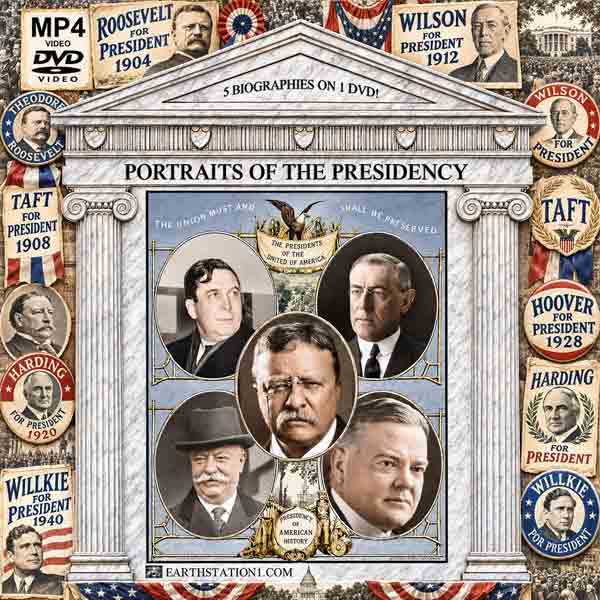
November 6, 1928: Elections: Elections In
The United States: The 1928 United States Presidential Election:
-- Republican Secretary of Commerce Herbert Hoover defeats the
Democratic nominee, Governor Al Smith of New York. The 1928 United
States Presidential Election was the 36th quadrennial presidential
election. After President Calvin Coolidge declined to seek
reelection, Hoover emerged as his party's frontrunner. As Hoover's
party opponents failed to unite around a candidate, Hoover
received a large majority of the vote at the 1928 Republican
National Convention. The strong state of the economy discouraged
some Democrats from running, and Smith was nominated on the first
ballot of the 1928 Democratic National Convention. Hoover and
Smith had been widely known as potential presidential candidates
long before the 1928 campaign, and both were generally regarded as
outstanding leaders. Both were newcomers to the presidential race
and presented in their person and record an appeal of unknown
potency to the electorate. Both faced serious discontent within
their respective parties' membership, and both lacked the
wholehearted support of their parties' organization. In the end,
the Republicans were identified with the booming economy of the
1920s, and Smith, a Roman Catholic, suffered politically from
anti-Catholic prejudice, his opposition to Prohibition, and his
association with the legacy of corruption by Tammany Hall. Hoover
won a third straight Republican landslide and made substantial
inroads in the traditionally-Democratic Solid South by winning
several states that had not voted for a Republican since the end
of Reconstruction. Hoover's victory made him the first president
born west of the Mississippi River, and he is the most recent
sitting member of the Cabinet to win a presidential election.
Charles Curtis was elected vice president, becoming the first
Native American and the first person with acknowledged
non-European ancestry to reach that office, a feat that was not
repeated until 2020, when Kamala Harris became vice president
under President Joe Biden. Hoover was the last Republican to win a
presidential election until 1952. As of the 2020 election, this is
the last time that the party of the incumbent president won
without their nominee being the incumbent president or the
incumbent vice president. This marked the first time a Republican
won without Massachusetts and Rhode Island. With Hoover's victory,
this cycle marked the last time until 1988 in which Republicans
have won the presidency three consecutive times. This is also the
most recent occasion in which three different presidential
nominees from the same party have won the presidency in a row,
something that only occurred twice before, in 1880 and 1908. On
Sale Until Midnight Tonight PT!
https://store.earthstation1.com/portraits-of-the-presidency-roosevelt-wilson-hoover-taft-willkie.html
Today's
EarthStation1.com 15% (Or More!) Off Commemorative Memorial Title:
Adlai Stevenson: The Man From Libertyville DVD, Download, USB
Drive
Today, November 6, 2026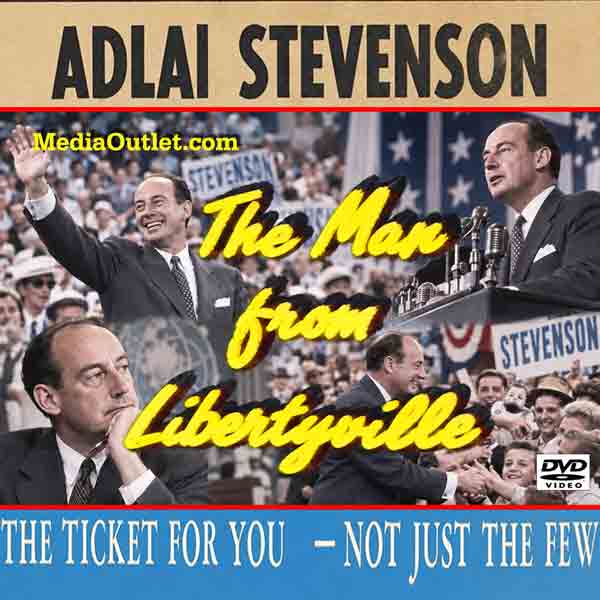
November 6, 1956: Elections: Elections In
The United States: The 1956 United States Presidential Election:
-- President Dwight D. Eisenhower wins reelection against Adlai
Stevenson II, the former Illinois governor whom he had defeated
four years earlier. The 1956 United States Presidential Election
was the 43rd quadrennial presidential election. This election saw
the sixth and most recent rematch in presidential history, and the
second where the winner was the same both times. Eisenhower, who
had first become famous for his military leadership in World War
II, remained widely popular. A heart attack in 1955 provoked
speculation that he would not seek a second term, but his health
recovered and he faced no opposition at the 1956 Republican
National Convention. Stevenson remained popular with a core of
liberal Democrats, but held no office and had no real base. He
defeated New York Governor W. Averell Harriman and several other
candidates on the first presidential ballot of the 1956 Democratic
National Convention. Stevenson called for a significant increase
in government spending on social programs and a decrease in
military spending. With the end of the Korean War and a strong
economy, few doubted that the charismatic Eisenhower would be
reelected. Supporters of the president focused on his "personal
qualities ... his sincerity, his integrity and sense of duty, his
virtue as a family man, his religious devotion, and his sheer
likeableness," rather than on his leadership record. The
weeks before the election saw two major international crises in
the Middle East and Eastern Europe, and Eisenhower's handling of
the crises boosted his popularity. Eisenhower slightly improved on
his 1952 majorities in both the popular and electoral vote. He
increased his 1952 gains among Democrats, especially Northern and
Midwestern white ethnics and city-dwelling and suburban White
Southerners. Although he unusually lost Missouri, which had been a
bellwether state for most of the 20th century and had voted for
him in the previous election of 1952, he picked up Kentucky,
Louisiana, and West Virginia, which had voted against him in the
previous election. This was the last presidential election before
the admissions of Alaska and Hawaii in 1959, the last presidential
election in which both Massachusetts and Minnesota voted
Republican, and the last election in which any of the major
candidates had been born in the 19th century. This is the last
election that a Republican won without North Carolina, South
Carolina, or Missouri. This was the first election since 1900 in
which an incumbent Republican won a second term after serving a
full term in office. On Sale Until Midnight Tonight PT!
https://store.earthstation1.com/adlai-stevenson-the-man-from-libertyville-dvd.html
Today's
EarthStation1.com 15% (Or More!) Off Commemorative Memorial Title:
Presidential Campaign TV Ads 1952-1992 MP4 Video Download 4 DVD
Set
Today, November 6, 2026
November 6, 1984: Elections: Elections In
The United States: The 1984 United States Presidential Election:
-- Incumbent Republican President Ronald Reagan defeated
Democratic former Vice President Walter Mondale, in a landslide,
winning 525 electoral votes and 58.8 percent of the popular vote.
The 1984 United States Presidential Election was the 50th
quadrennial presidential election. No other candidate in history
has matched Reagan's electoral vote total. This is the most recent
US presidential election in which a candidate received over 500
electoral votes, as well as the most recent election in which both
major party candidates are deceased, and the last time that a
major party candidate failed to carry more than 100 electoral
votes. Reagan and Vice President George H. W. Bush faced only
token opposition in their bid for re-nomination. Mondale faced a
competitive field in his bid, defeating Colorado Senator Gary
Hart, activist Jesse Jackson and several other candidates in the
1984 Democratic primaries. He eventually chose U.S. Representative
Geraldine Ferraro of New York as his running mate, the first woman
to be on a major party's presidential ticket. Reagan touted a
strong economic recovery from the 1970s stagflation and the
1981-1982 recession, as well as the widespread perception that his
presidency had overseen a revival of national confidence and
prestige. At 73, Reagan was, at the time, the oldest person ever
to be nominated by a major party for president until the
nomination of Joe Biden in 2020. The Reagan campaign produced
effective television advertising and deftly neutralized concerns
regarding Reagan's age. Mondale criticized Reagan's supply-side
economic policies and budget deficits and he called for a nuclear
freeze and ratification of the Equal Rights Amendment. Reagan won
a landslide re-election victory, carrying 49 of the 50 states,
making this the second election in the twentieth century in which
a party won 49 states (after the 1972 election). Mondale won only
his home state of Minnesota with a 0.18% margin of victory, and
the District Of Columbia. On Sale Until Midnight Tonight PT!
https://store.earthstation1.com/presidential-campaign-tv-ads-19521984-dvds-2-dual-la195219842.html
Today's
EarthStation1.com 15% (Or More!) Off Commemorative Memorial Title:
World War 1 TV Series With Robert Ryan DVD, Video Download, USB
Drive
Today, November 6, 2026
November 6, 1917: The European Civil War:
World War I: The First European War (The European Theater Of World
War I): The Western Front Of World War I: The Battles Of Ypres
(The Battle Of Ypres): The Battle Of Passchendaele (The Third
Battle Of Ypres): -- The bloodiest of the five Battles Of Ypres
concludes after five months as Canadian and Australian troops win
the three-month-long Battle Of Passchendaele in Belgium. Their
advance, measuring five miles, cost at least 240,000 soldiers. The
term "Battle Of Ypres" could mean all the fighting that
occurred in that area. But the "Battle Of Ypres" could
refer more specifically to any one of five battles which have been
separately identified and named (and which themselves can be
subdivided into smaller named battles). The five battles were: 1)
First Battle Of Ypres (October 19 - November 22, 1914). During the
Race to the Sea. More than 100,000 casualties; 2) Second Battle Of
Ypres (April 22 - May 15, 1915). First mass use of poison gas by
the German army; included first victories of a former colonial
nation (Canada) over a European power (Germany) on European soil.
Around 100,000 casualties; 3) Battle Of Passchendaele (July 31 -
November 10, 1917) also known as the Third Battle Of Ypres.
400,000 to 800,000 casualties; 4) Battle of the Lys (1918) (April
9-29, 1918) also known as the Battle of Estaires or the Fourth
Battle Of Ypres. Around 200,000 casualties; and 5) Fifth Battle Of
Ypres (September 28 - October 2, 1918) an informal name given to a
series of battles in northern France and southern Belgium, also
known as Advance of Flanders and Battle of the Peaks of Flanders.
Around 10,000 Allied casualties were suffered; German casualties
are unknown. On Sale Until Midnight Tonight PT!
https://store.earthstation1.com/world-war-1-robert-ryan-4-dual-layer-dvds-26-episode-tv-se1426.html
Today's
EarthStation1.com 15% (Or More!) Off Commemorative Memorial Title:
Gung Ho! 1943 Carlson's Raiders Randolph Scott DVD, Download, USB
Today, November 6, 2026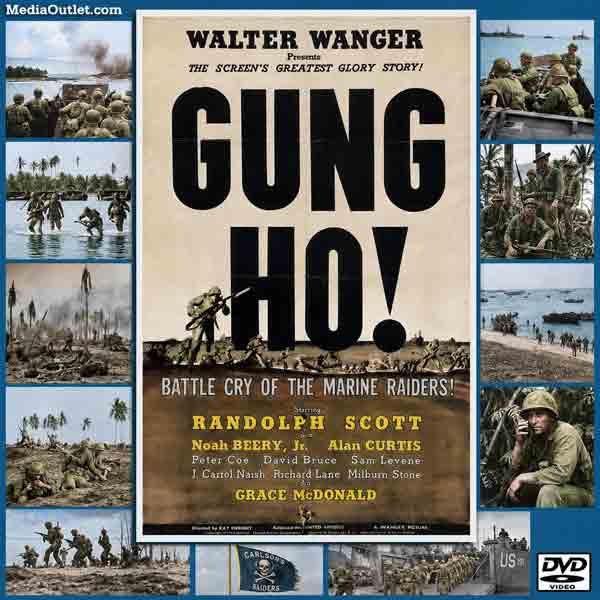
November 6, 1942: World War II: The
Pacific War (The Asia-Pacific War, The Asiatic-Pacific Theater,
The Pacific Theater Of World War II): The Pacific Ocean Theater Of
World War II: The South West Pacific Area (SWPA): Operation
Cartwheel: The Solomon Islands Campaign: The Battle Of Guadalcanal
(The Guadalcanal Campaign, Operation Watchtower): Carlson's Patrol
(The Long Patrol, Carlson's Long Patrol): -- Carlson's Patrol
begins, an operation by the 2nd Marine Raider Battalion under the
command of Evans Carlson during the Guadalcanal Campaign against
the Imperial Japanese Army from 6 November to 4 December 1942. In
the operation, the 2nd Raiders attacked forces under the command
of Toshinari Shoji, which were escaping from an attempted
encirclement in the Koli Point area on Guadalcanal and attempting
to rejoin other Japanese army units on the opposite side of the
U.S. Lunga perimeter. In a series of small unit engagements over
29 days, the 2nd Raiders killed almost 500 Japanese soldiers while
suffering only 16 killed, although many were afflicted by disease.
The raiders also captured a Japanese field gun that was delivering
harassing fire on Henderson Field, the Allied airfield at Lunga
Point on Guadalcanal. The Marine Raider Battalion thereafter
became famous as Carlson's Raiders, and a movie was made in 1943
based on their actions, "Gung Ho!". On Sale Until
Midnight Tonight PT!
https://store.earthstation1.com/gung-ho-dvd-1943-randolph-scott-robert-mit1943.html
Today's
EarthStation1.com 15% (Or More!) Off Commemorative Memorial Title:
US Fleet Submarines Of The Pacific War MP4 Video Download DVD
Today, November 6, 2026
November 6, 1943: Naval History: The
History Of The United States Navy: The New United States Navy (The
New Navy, The United States Navy 1885-Present): Naval Commissions:
Submarines (Subs): -- The USS Pampanito (SS-383/AGSS-383): -- The
USS Pampanito, a Balao-class submarine who completed six war
patrols from 1944 to 1945 and served as a United States Naval
Reserve training ship from 1960 to 1971, now a National Historic
Landmark, preserved as a memorial and museum ship in the San
Francisco Maritime National Park Association located at
Fisherman's Wharf in San Francisco, California, the third United
States Navy ship named for the pompano fish, is commissioned.
Pampanito's keel was laid down on March 15, 1943 at the Portsmouth
Navy Yard in Kittery, Maine, and was launched on July 12, 1943
sponsored by Mrs. Violet Wolfenden of Waltham, Massachusetts, wife
of William Sellers Park Sr.. The United States Navy's Balao-class
submarines were the greatest long-range submarines of World War
II. They were named for the balao, a small schooling marine fish,
and with 120 boats completed, the Balao class is the largest class
of submarines in the United States Navy. An improvement on the
earlier Gato class, the boats had slight internal differences. The
most significant improvement was the use of thicker, higher yield
strength steel in the pressure hull skins and frames, which
increased their test depth to 400 feet (120 m); Balao Class
submraine USS Tang actually achieved a depth of 612 ft (187 m)
during a test dive, and exceeded that test depth when taking on
water in the forward torpedo room while evading a destroyer. On
Sale Until Midnight Tonight PT!
https://store.earthstation1.com/us-fleet-submarines-of-the-pacific-war-mp4-video-download-dvd.html
Today's
EarthStation1.com 15% (Or More!) Off Commemorative Memorial Title:
Crime Inc.: The True Story Of The Mafia TV Series DVD, MP4, USB
Stick
Today, November 6, 2026
November 6, 1928: #DOTD: Arnold
Rothstein, nicknamed "The Brain", Jewish-American mob
boss, racketeer, businessman and gambler who became a kingpin of
the Jewish mob in New York City, widely reputed to have organized
corruption in professional athletics, including conspiring to fix
the 1919 World Series, whose notoriety inspired several fictional
characters based on his life, portrayed in contemporary and later
short stories, novels, musicals, and films such the character
Hyman Roth in The Godfather II (b. January 17, 1882) #dies of a
gunshot wound received during a business meeting at Manhattan's
Park Central Hotel at Seventh Avenue near 55th Street, and died at
the New York Polyclinic Hospital in Manhattan, aged 46. Rothstein
was buried at Union Field Cemetery in Ridgewood, New York. His
illegal empire was broken up and distributed among a number of
other underworld organizations and led in part to the downfall of
Tammany Hall and the rise of reformer Fiorello La Guardia. Ten
years after his death, his brother declared Rothstein's estate was
bankrupt. The shooting was reportedly linked to debts owed from a
fixed, three-day-long, high-stakes poker game in October, for
which Rothstein owed 320K USD (equivalent to 5.5M USD in 2022).
Rothstein figured out that the game was fixed and refused to pay.
The murder was intended to punish Rothstein for failing to pay his
debt. Gambler George "Hump" McManus was arrested for
homicide, but later acquitted for lack of evidence. According to
Kevin Cook, author of Titanic Thompson, the poker game was fixed
by gambler Titanic Thompson (born Alvin Clarence Thomas) and his
associate, Nate Raymond. Due to some complicated side bets, by the
end Rothstein owed 319K USD to Raymond (much of which Raymond, by
secret agreement, was to pass on to Thompson); 30K USD to
Thompson; and about 200K USD to the other gamblers present.
McManus owed Rothstein 51K USD. Rothstein stalled for time, saying
that he would not be able to pay until after the elections of
November 1928, when he expected to win 550K USD for successfully
backing Herbert Hoover for president and Franklin D. Roosevelt for
governor. Thompson testified at McManus' trial, describing him as
"a swell loser" who would never have shot Rothstein.
According to Cook, Thompson later told some of his acquaintances
that the killer had not been McManus, but rather his "bag
man", Hyman Biller, who fled to Cuba shortly afterwards.
Ironically had Rothstein lived he would have won his last bet as
Hoover and FDR did win the 1928 elections. In his book Kill the
Dutchman!, a biography of Dutch Schultz published in 1971, the
crime reporter Paul Sann suggested that Schultz murdered
Rothstein. He says this was in retaliation for the murder of
Schultz's friend and associate Joey Noe by Rothstein's protege
Jack "Legs" Diamond. On his deathbed, Rothstein refused
to identify his shooter, answering police inquiries with "You
stick to your trade. I'll stick to mine", and "Me mudder
(my mother) did it." Also known as Mr. Big, The Fixer, The
Man Uptown, and The Big Bankroll, Rothstein transformed organized
crime from a thuggish activity by hoodlums into a big business,
run like a corporation, with himself at the top. Rothstein was the
person who first realized that Prohibition was a business
opportunity, a means to enormous wealth, and was a mentor of
future crime bosses Lucky Luciano, Meyer Lansky, Frank Costello,
Bugsy Siegel and numerous others. Arnold Rothstein was born into a
comfortable life in Manhattan, the son of an affluent Ashkenazi
Jewish businessman, Abraham Rothstein, and his wife, Esther. His
father was a man of upright character, who had acquired the
nickname "Abe the Just". Arnold was highly skilled at
mathematics, but was otherwise uninterested in school. His older
brother studied to become a rabbi. Rothstein was known to be a
difficult child, and he harbored a deep envy of his older brother,
Harry. Rothstein's father believed that his son always craved to
be the center of attention and would often get frustrated when he
was not. As a child, Rothstein began to indulge in gambling, but
no matter how often his father scolded him for shooting dice,
Rothstein would not stop. In 1921, Rothstein was asked how he
became a gambler, "I always gambled. I can't remember when I
didn't. Maybe I gambled just to show my father he couldn't tell me
what to do, but I don't think so. I think I gambled because I
loved the excitement. When I gambled, nothing else mattered."
On Sale Until Midnight Tonight PT!
https://store.earthstation1.com/crime-inc-the-true-story-of-the-mafia-dvd-set-2-disc2.html
Today's
EarthStation1.com 15% (Or More!) Off Commemorative Memorial Title:
Olsen and Johnson's Fireball Fun-For-All TV Series DVD, MP4 USB
Drive
Today, November 6, 2026
November 6, 1892: #BOTD: #HBD! Ole Olsen,
American vaudevillian and comedian, best known as half of the
Olsen and Johnson comedy duo of vaudeville, radio, the Broadway
stage, motion pictures and television (d. January 26, 1963) is
#born in Peru, Indiana. John Sigvard "Ole" Olsen was the
son of a Norwegian immigrant, Gustav Olsen, a boiler-maker for the
railroad, and his wife, Catherine, who was of Swiss-German
descent. He graduated from Northwestern University in 1912 with a
degree in music and hit the Vaudeville circuit. In 1914 he met
Chic Johnson, who was advertising himself as the "Greatest
Ragtime Pianist in the Midwest". The two performers met when
they were hired as musicians in the same band. When the band broke
up "Ole" Olsen and "Chic" Johnson formed the
Olsen and Johnson comedy team. They really did not have a set act
but found themselves booked into a small Chicago nightclub as part
of Mike Fritzol's Frolics. When it came time for their turn in the
show, unannounced and not particularly welcome, the duo pushed a
piano onstage. Johnson seated himself at the keyboard and began to
plunk out a ragtime tune. Olsen joined in with his violin and
started singing, making up comical lyrics as he went along. The
pair began to exchange "patter", mostly insults, and the
soon-to-be-famous "Olsen and Johnson" team emerged. They
performed in Vaudeville, as well as making some film appearances,
for 24 years before hitting Broadway in 1938 with the show
Hellzapoppin', later made into a successful cult film. They were
early pioneers of television with their 1949 tv comedy series
Fireball Fun-For-All, which is largely representive of their
highly-original, fourth wall-breaking vaudeville act. Ole Olsen
was married twice. He had three children with his first wife,
Lillian: J. C., Joy, and Moya. They were later divorced. His son,
J. C., died by suicide. Moya married William P. Lear of Learjet
fame in 1942. Ole was involved in a serious automobile accident in
1950 and recuperated at the Lear home. In June 1961 Ole married
Eileen Maria Osthoff, a dancer and choreographer he had known for
eight years. Ole's ambition was to make people laugh. He is
remembered for the quote, "May you live as long as you laugh,
and laugh as long as you live", which are cited on his
headstone. Olsen died in Albuquerque, New Mexico at the age of 70
of a kidney ailment, and is interred in Palm Desert Memorial in
Las Vegas, Nevada, in a grave adjoining that of Chic Johnson. On
Sale Until Midnight Tonight PT!
https://store.earthstation1.com/olsen-and-johnson39s-fireball-funforall-dvd-1949-tv391949.html
Today's
EarthStation1.com 15% (Or More!) Off Commemorative Memorial Title:
Spike Jones Nutcracker Suite Complete 3 Record Set MP3 CD Download
Today, November 6, 2026
November 6, 1893: #DOTD: #RIP: Pyotr
Ilyich Tchaikovsky, Russian composer of the Romantic period, the
first Russian composer whose music would make a lasting impression
internationally (b. May 7, 1840) #dies in Saint Petersburg, Russia
by contracting cholera, either by accident or as has been alleged
as an act of suicide by drinking cholera-infected water or by
taking poison, nine days after he conducted the premiere of his
Sixth Symphony, the Pathetique, aged 53. He is interred in Tikhvin
Cemetery at the Alexander Nevsky Monastery, near the graves of
fellow-composers Alexander Borodin, Mikhail Glinka, and Modest
Mussorgsky; later, Nikolai Rimsky-Korsakov and Mily Balakirev were
also buried nearby. Tchaikovsky's death is attributed to cholera,
caused by drinking unboiled water at a local restaurant. In the
1980s in Britain, however, there was academic speculation that he
killed himself, either with poison or by contracting cholera
intentionally; it has been alleged that a secret jury of his
musical peers directed him to commit suicide to atone for a
homosexual relationship, then very taboo in Russia; in the New
Grove Dictionary of Music, Roland John Wiley wrote: "the
polemics over Tchaikovsky's death have reached an impasse. As for
illness, problems of evidence offer little hope of satisfactory
resolution: the state of diagnosis; the confusion of witnesses;
disregard of long-term effects of smoking and alcohol. We do not
know how Tchaikovsky died. We may never find out." Pyotr
Ilyich Tchaikovsky was born in Votkinsk, a small town in Vyatka
Governorate (present-day Udmurtia) near the banks of the Kama
River, and not far from the Ural Mountains in the Russian Empire,
into a family with a long history of military service. Tchaikovsky
wrote some of the most popular concert and theatrical music in the
current classical repertoire, including the ballets Swan Lake and
The Nutcracker, the 1812 Overture, his First Piano Concerto,
Violin Concerto, the Romeo and Juliet Overture-Fantasy, several
symphonies, and the opera Eugene Onegin. Although musically
precocious, Tchaikovsky was educated for a career as a civil
servant as there was little opportunity for a musical career in
Russia at the time and no system of public music education. When
an opportunity for such an education arose, he entered the nascent
Saint Petersburg Conservatory, from which he graduated in 1865.
The formal Western-oriented teaching that Tchaikovsky received
there set him apart from composers of the contemporary nationalist
movement embodied by the Russian composers of The Five with whom
his professional relationship was mixed. Tchaikovsky's training
set him on a path to reconcile what he had learned with the native
musical practices to which he had been exposed from childhood.
From that reconciliation, he forged a personal but unmistakably
Russian style. The principles that governed melody, harmony, and
other fundamentals of Russian music ran completely counter to
those that governed Western European music, which seemed to defeat
the potential for using Russian music in large-scale Western
composition or for forming a composite style, and it caused
personal antipathies that dented Tchaikovsky's self-confidence.
Russian culture exhibited a split personality, with its native and
adopted elements having drifted apart increasingly since the time
of Peter the Great. That resulted in uncertainty among the
intelligentsia about the country's national identity, an ambiguity
mirrored in Tchaikovsky's career. Despite his many popular
successes, Tchaikovsky's life was punctuated by personal crises
and depression. Contributory factors included his early separation
from his mother for boarding school followed by his mother's early
death, the death of his close friend and colleague Nikolai
Rubinstein, his failed marriage with Antonina Miliukova, and the
collapse of his 13-year association with the wealthy patroness
Nadezhda Von Meck. Tchaikovsky's homosexuality, which he kept
private, has traditionally also been considered a major factor
though some scholars have played down its importance. His
dedication of his Sixth symphony to his nephew Vladimir "Bob"
Davydov and his feelings expressed about Davydov in letters to
others, especially following Davydov's suicide, have been cited as
evidence for a romantic love between the two. Tchaikovsky's sudden
death at the age of 53 is generally ascribed to cholera, but there
is an ongoing debate as to whether cholera was indeed the cause
and whether the death was accidental or intentional. While his
music has remained popular among audiences, critical opinions were
initially mixed. Some Russians did not feel it was sufficiently
representative of native musical values and expressed suspicion
that Europeans accepted the music for its Western elements. In an
apparent reinforcement of the latter claim, some Europeans lauded
Tchaikovsky for offering music more substantive than exoticism,
and said he transcended the stereotypes of Russian classical
music. Others dismissed Tchaikovsky's music as deficient because
they did not stringently follow Western principles. On Sale Until
Midnight Tonight PT!
https://store.earthstation1.com/spike-jones-nutcracker-suite-all-3-45-rpm-records-mp3453.html
Today's
EarthStation1.com #OnThisDay Commemorative Memorial Title: Classic
Juvenile Delinquency Films Collection MP4 Video Download DVD
Today, November 6, 2026 November 6: Marooned Without A Compass
Day: -- A day that puts a spotlight on the direction of our lives,
or the lack of it. On this day, we ask ourselves the hard
questions. Where is my life going? Am I happy? In a rather literal
sense, 'marooned' means being trapped alone in a place, but in a
mindful sense, it describes the gloom that comes with being lost
in our life. The day is all about climbing up from the rock bottom
of our lives and becoming our compass. The Oxford Dictionary
defines the word 'marooned' as "trapped and alone in an
inaccessible place, especially an island." Isn't this how we
often feel? Stranded alone on a metaphorical island with no one to
save us. Or being stuck in the trappings of our mind without a
hand to guide us out. Like a compass that works in sync with the
magnetic forces of the earth, humans are also connected with
nature in mysterious ways. It is a direct callout to the times
bygone when we all used our compasses to trace the directions of
our journey. The day is a gentle urge to find our life's direction
and reject the paths which do not align with our purpose. The day
also calls out the pervasiveness of the self-help culture of
America. Being the world's bestselling genre, thousands of
self-help books are published each year. Every nightstand has one,
and it makes for the perfect gift. Although their impact remains
untraceable, the gist is clear - people want to help themselves,
all they need is a cheat sheet in the form of a self-help book. As
we continue to research the origins of this holiday, the message
behind it is clear. The daunting feelings about losing our purpose
and being lost in life are shared by millions of humans. There are
various ways in which we traverse these rocky times to triumph so
that we move forward and unmire ourselves.
https://store.earthstation1.com/classic-juvenile-delinquency-films-collection-mp4-video-download-dv4.html
Today's
EarthStation1.com #OnThisDay Commemorative Memorial Title: Hell On
Earth: The Kuwaiti Oil Fires Documentary Set MP4 Download DVD
Today, November 6, 2026November 6: International Day For
Preventing The Exploitation Of The Environment In War And Armed
Conflict: -- A long name, yes, but a long-time problem, too.
Humanity undeniably always suffers from war. People are killed and
injured. Cities are burned to the ground. But what about the
environment? Rivers, seas, and wells are polluted. Crops are
burned and forests are cut down. Soils are poisoned. The natural
world around us, including other living species, weather, climate,
and natural resources, affects us and is affected by us.
Therefore, this day was created to protect the environment as a
guarantor of security and peace; to prevent its exploitation in
military conflicts. We are all urged to speak out and reaffirm our
commitment to protecting our endangered planet, even in the face
of armed aggression. War and armed conflict destroy humanity and
other forms of life on our planet. If we just take the recent
history, decades of terrible wars, such as in Afghanistan,
Colombia, or Iraq, have led to a huge loss of natural resources.
In Afghanistan alone, we have witnessed an impressive rate of
deforestation, up to 95% in some areas. It was catastrophic for
wildlife and forest conservation, as these habitats opened the
door to illegal logging, unregulated mining, and mass poaching.
The elephant population has been wiped out in the Central African
Republic, while in Ukraine, the Seversky Donets River has suffered
further damage from pollution. In Gaza and Yemen, the water
infrastructure has been damaged, posing risks to the environment
and public health. Ignoring such disastrous consequences is not an
option. Indeed the international community was urged to act
through the declaration of this international day by the U.N. in
2001.
https://store.earthstation1.com/hell-on-earth-the-kuwaiti-oil-fires-dvd-mp4-download-usb-flash-driv4.html
Today's
EarthStation1.com #OnThisDay Commemorative Memorial Title: The Old
Time Radio History MP3 MegaSet DVD, Audio Download, USB Drive
Today, November 6, 2026November 6, 1935: #DOTD: #RIP: Billy
Sunday, American radio televangelist and athlete who, after being
a popular outfielder in baseball's National League during the
1880s, became the most celebrated and influential American
evangelist during the first two decades of the 20th century (b.
November19, 1862) #dies of a heart attack in Chicago, Illinois,
aged 72. He is buried in Forest Home Cemetery in Forest Park,
Illinois. Billy Sunday was born William Ashley Sunday into poverty
as near Ames, Iowa. His father, William Sunday, was the son of
German immigrants named Sonntag, who had anglicized their name to
"Sunday" when they settled in Chambersburg,
Pennsylvania. William Sunday was a bricklayer who worked his way
to Iowa, where he married Mary Jane Corey, daughter of "Squire"
Martin Corey, a local farmer, miller, blacksmith, and wheelwright.
William Sunday enlisted in the Iowa Twenty-Third Volunteer
Infantry on August 14, 1862. He died four months later of
pneumonia at an army camp in Patterson, Missouri, five weeks after
the birth of his youngest son, William Ashley. Mary Jane Sunday
and her children moved in with her parents for a few years, and
young Billy became close to his grandparents and especially his
grandmother. Mary Jane Sunday later remarried, but her second
husband soon deserted the family. When Billy Sunday was ten years
old, his impoverished mother sent him and an older brother to the
Soldiers' Orphans Home in Glenwood, Iowa, and later to the Iowa
Soldiers' Orphans' Home in Davenport, Iowa. At the orphanage,
Sunday gained orderly habits, a decent primary education, and the
realization that he was a good athlete. Sunday spent some years at
the Iowa Soldiers' Orphans' Home before working at odd jobs and
playing for local running and baseball teams. His speed and
agility provided him the opportunity to play baseball in the major
leagues for eight years, where he was an average hitter and a good
fielder known for his base-running. Converting to evangelical
Christianity in the 1880s, Sunday left baseball for the Christian
ministry. He gradually developed his skills as a pulpit evangelist
in the Midwest and then, during the early 20th century, he became
the nation's most famous evangelist with his colloquial sermons
and frenetic delivery. Sunday held widely reported campaigns in
America's largest cities, and he attracted the largest crowds of
any evangelist before the advent of electronic sound systems. He
also made a great deal of money and was welcomed into the homes of
the wealthy and influential. Sunday was a strong supporter of
Prohibition, and his preaching likely played a significant role in
the adoption of the Eighteenth Amendment in 1919. Despite
questions about his income, particularly those regarding big
business financing of his prohibition crusades, no scandal ever
touched Sunday. He was sincerely devoted to his wife, who also
managed his campaigns, but his three sons disappointed him,
engaging in many of the activities he preached against, and the
Sundays paid blackmail to several women to keep the scandals
relatively quiet. In 1930, Nora Lynn, their housekeeper and nanny,
who had become a virtual member of the family, died. Then the
Sundays' daughter, the only child actually raised by his wife
Helen Thompson "Nell" Sunday, died in 1932 of what seems
to have been multiple sclerosis. Their oldest son George, rescued
from financial ruin by his parents, committed suicide in 1933.
Nevertheless, even as the crowds declined during the last 15 years
of his life, Sunday continued accepting preaching invitations and
speaking with effect. In early 1935, he had a mild heart attack,
and his doctor advised him to stay out of the pulpit. Sunday
ignored the advice. He died on November 6, a week after preaching
his last sermon on the text "What must I do to be saved?"
His audiences grew smaller during the 1920s as Sunday grew older,
religious revivals became less popular, and alternative sources of
entertainment appeared such as radio and motion pictures.
Accordingly, Billy Sunday went on to pioneer radio preaching, and
did that so enthusiastically that the FCC was formed when his
radio signal began overlapping ballgame broadcasts. Sunday
continued to preach and remained a stalwart defender of
conservative Christianity until his death.
https://store.earthstation1.com/the-old-time-radio-history-megaset-dual-layer-mp3-dv3.html
Today's
EarthStation1.com #OnThisDay Commemorative Memorial Title: The
Buffalo Soldiers African American Soldier History DVD, MP4, USB
Today, November 6, 2026November 6, 1906: Racism: Racism In The
United States: Anti-Black Racism: Anti-Black Racism In The United
States: The African-American History Of The United States
Military: The Buffalo Soldiers: The Brownsville Affair (The
Brownsville Raid): -- President Theodore Roosevelt orders
discharge of three companies of Twenty-fifth Regiment for alleged
involvement in the Brownsville Raid. The Brownsville Affair
occurred due to resentment by white residents of Brownsville,
Texas, of the Buffalo Soldiers, black soldiers in a segregated
unit stationed at nearby Fort Brown. When a white bartender was
killed and a white police officer wounded by gunshots one night,
townspeople accused the members of the African-American 25th
Infantry Regiment. Although their commanders said the soldiers had
been in the barracks all night, evidence was allegedly planted
against the men.As a result of a United States Army Inspector
General's investigation, President Theodore Roosevelt ordered the
discharge without honor of 167 soldiers of the 25th Infantry
Regiment, costing them pensions and preventing them from ever
serving in federal civil service jobs. The case aroused national
outrage in both black and white communities. After more
investigation, several of the men were allowed to re-enlist.
Following publication of a history of the affair in the early
1970s, a renewed military investigation exonerated the discharged
black troops. The government pardoned the men in 1972 and restored
their records to show honorable discharges, but it did not provide
retroactive compensation to them or their descendants. Only one
man had survived to that time; Congress passed an act to provide
him with a tax-free pension. The other soldiers who had been
expelled all received posthumous honorable discharges.
https://store.earthstation1.com/the-buffalo-soldiers-dvd-african-american-soldier-history-dvd-mp4-us4.html
Today's
EarthStation1.com #OnThisDay Commemorative Memorial Title: School
Segregation: Little Rock & Boston MP4 Video Download DVD
Today, November 6, 2026November 6, 1970: White Supremacy:
Terrorism: Anti-Black Racism: Anti-Black Racism In The United
States: Race Riots: Race Riots In The United States: The Nadir Of
American Race Relations (1877/1890 - 1901/1923/1941 [Dates
Disputed]): Civil Rights Movements: The American Civil Rights
Movement (1954-1968): School Desegregation: The 1970 Henderson,
North Carolina Riot: -- A dispute over school desegregation
policies erupts into sniping and burning, resulting the following
day in North Carolina Governor Robert W. Scott ordering National
Guardsmen into Henderson, North Carolina to enforce a 6 P.M. to 6
A.M. curfew on this city of 12,500 people and on surrounding Vance
County, on the Virginia border. The move came after about 100
black youths gathered in the smoldering ruins of a tobacco
warehouse and began hurling bricks and pieces of pipe at passing
automobiles. About 40 arrests were made during the night-long
disturbance, concentrated in a four block area of a blackneighbor
hood. The state and local blocked off the troubled area and let
fires in the ware house, a small grocery and several homes burn
themselves out after firemen retreated from the area under what
City Manager Robert Buck called a "barrage of fire."
Police moved out of the trouble area late Friday night as the
fires burned themselves out, and Buck said, "we hope they
will stop burning when they see we care about our own hides."
Buck said firemen stopped answering any alarms in the area after a
false alarm brought a "barrage of fire" on policemen and
firemen. "We had to pull back," he said. 59 years old
fireman Lieut. Joseph M. Hicks, died from gunshot wounds in the
head suffered when a 32-caliber pistol fell out of his belt, hit
the pavement and discharged. Lieutenant Hicks was one of many
firemen who used arms for protection. Two whites were injured, but
no one was reported hit by gun fire. Violence also broke out in
Greenville, S.C., where black and white students clashed in a
newly integrated high school. White parents rushed to the school
and smashed out windows so children could flee the melee. No one
was seriously injured. Blacks had staged protests there for weeks
over policies of Vance County education officials, especially the
reopening of an all-black school in the Nutbush community. Blacks
charged that the board was trying to avoid desegregation. The
school board agreed Wednesday to close the black school and
transfer its students to desegregated schools, but a group of
young blacks gathered yesterday afternoon at the education office
to demonstrate for the hiring of a Negro coach and a Negro
assistant principal. The protesters left the building and gathered
in the street near a church. The police ordered them to disperse
because they were blocking traffic. Officers used tear gas to
break up the crowd, who hurled bricks and bottles at the police in
response. Ben Chavis, a leader of the protesters, charged that the
police began chasing some students after they left the education
building and some were hit with nightsticks before the stones were
thrown. After night fell fires were touched off at the warehouse
and grocery in the black neighborhood, and police were fired upon
in the dark. Highway Patrol reinforcements in riot helmets with
face shields were hurriedly brought in. The police moved out of
the troubled area late last night as the fires burned themselves
out. A police officer said "We had no choice, we had to let
it burn." A vacationing United Press International reporter,
Mark Scheinbaum of New York, was beaten to the ground and had his
camera stolen by a black mob when he stopped to see what was going
on. Scheinbaum, who was on his way to Florida with his wife and
small child, was treated at a hospital and released. The area was
quiet early by morning as highway patrol units moved back into the
black neighborhood.
https://store.earthstation1.com/school-segregation-little-rock-amp-boston-mp4-video-download-dv4.html
Today's
EarthStation1.com #OnThisDay Commemorative Memorial Title: The
Unknown War: The Great Patriotic War Series WWII USSR DVD MP4 USB
Today, November 6, 2026November 6, 1943: The European Civil War:
World War II: The Second European War (The European Theater Of
World War II): The Eastern Front Of World War II: The Great
Patriotic War (The German-Soviet War): The Battle Of The Dnieper
(The Dnieper Campaign [1943]): The Second Battle Of Kiev (November
3 - December 22, 1943): -- The 1st Ukrainian Front, a major
formation of the Soviet Army during World War II equivalent to a
Western army group, liberates Kyiv from German occupation. During
World War II, Reichskommissariat Ukraine (Ukrainian:
Raykhskomisariat Ukrayina, abbreviated as RKU) was the civilian
occupation regime (Reichskommissariat) of much of Nazi
German-occupied Ukraine (which included adjacent areas of
modern-day Belarus and pre-war Second Polish Republic). It was
governed by the Reich Ministry for the Occupied Eastern
Territories headed by Alfred Rosenberg. Between September 1941 and
August 1944, the Reichskommissariat was administered by Erich Koch
as the Reichskommissar. The administration's tasks included the
pacification of the region and the exploitation, for German
benefit, of its resources and people. The Second Battle Of Kiev,
part of a much wider Soviet offensive in Ukraine known as the
Battle of the Dnieper involving three strategic operations by the
Soviet Red Army and one operational counterattack by the
Wehrmacht, took place between November 3 and December 22, 1943.
Following The Battle Of Kursk, the Red Army launched the
Belgorod-Kharkov Offensive Operation, pushing Erich Von Manstein's
Army Group South back towards the Dnieper River. Stavka, the
Soviet high command, ordered the Central Front and the Voronezh
Front to force crossings of the Dnieper. When this was
unsuccessful in October, the effort was handed over to the 1st
Ukrainian Front, with some support from the 2nd Ukrainian Front.
The 1st Ukrainian Front, commanded by Nikolai Vatutin, was able to
secure bridgeheads north and south of Kiev.
https://store.earthstation1.com/the-unknown-war-complete-tv-series-soviet-union-wwii-10-dvd-s10.html
Today's
EarthStation1.com #OnThisDay Commemorative Memorial Title:
Sleepers 1991 Russian Spies In UK TV Drama Series DVD MP4 Download
USB
Today, November 6, 2026November 6, 1951: #BOTD: #HBD! Nigel
Havers, English actor and presenter, is #born Nigel Allan Havers
in Edmonton, North London, England. His film roles include Lord
Andrew Lindsay in the 1981 British film Chariots of Fire, which
earned him a BAFTA nomination; as Dr. Rawlins in the 1987 Steven
Spielberg war drama, Empire of the Sun; and as Ronny in the 1984
David Lean epic A Passage to India. Television roles include Tom
Latimer in the British TV comedy series Don't Wait Up and Lewis
Archer in Coronation Street, between 2009 and 2019. Havers
co-starred with Warren Clarke in the 1991 comedic mini-series
Sleepers on the BBC. In it, he and Clarke played former KGB spies
who had assimilated into English life in the 1960s and were "lost"
for 25 years. Successfully and happily living as Englishmen, their
worlds are turned upside-down when they discover that the KGB is
looking for them. As they resist going back to Russia, the
ex-spies lead the KGB, CIA, and MI5 on a madcap chase through
England.
https://store.earthstation1.com/sleepers-1991-dvd-4-part-cold-war-spy-tv-miniseries-dvd-set-2199142.html
Today's
EarthStation1.com #OnThisDay Commemorative Memorial Title: SS:
1923-1945 History Of The Schutzstaffel Nazis DVD, MP4, USB Stick
Today, November 6, 2026November 6, 1939: The European Civil War:
World War II: The Second European War (The European Theater Of
World War II): The Invasion Of Poland (The September Campaign, The
Polish Campaign, The War Of Poland Of 1939, The Polish Defensive
War Of 1939): Sonderaktion Krakau: -- Sonderaktion Krakau
(English: Special Operation Krakow) takes place, the codename for
a Nazi German operation against professors and academics of the
Jagiellonian University and other universities in German occupied
Krakow, Poland, at the beginning of World War II. It was carried
out as part of the much broader action plan, the
Intelligenzaktion, to eradicate the Polish intellectual elite
especially in those centres (such as Krakow) that were slated by
the Germans to become culturally German. It is not clear if
Sonderaktion Krakau was the actual German codename. The reason for
the detention was communicated to professors in the concentration
camp.
https://store.earthstation1.com/ss-19231945-dvd-schutzstaffel-history-doc19231945.html
Today's
EarthStation1.com #OnThisDay Commemorative Memorial Title: Mahatma
Mohandas Gandhi Documentaries DVD MP4 Download USB Drive
Today, November 6, 2026November 6, 1913: South Africa: The
History Of South Africa: Civil Rights Movements: The South African
Civil Rights Movement: The Indian Relief Bill Protest March: --
Mohandas Gandhi is arrested while leading a march on behalf of the
rights of Indian miners in South Africa, a march which included
127 women, 57 children and 2037 men. He was released on bail,
rejoined the march, and then was re-arrested. By 1913, a tax had
been imposed on all former indentured labourers, known as The
Indian Relief Bill. In protest of this, Gandhi launched a passive
resistance campaign, gaining the support of thousands of mine
workers. The Indian Relief Bill was finally scrapped. Gandi
returned to India, and through his consistent passive opposition
to British rule, led his country to independence. His philosophy
on passive resistance was drawn on significantly during the fight
against apartheid. The Defiance Campaign in 1952 can be seen as an
example of this. On his journey to South Africa in 1893, Mohandas
Gandhi had first -hand experience of the discrimination faced by
people of colour. His response to this was the establishment of
the Natal Indian Congress (NIC) in 1894. Within three years of his
arrival in South Africa, Gandhi had become a political leader,
providing hope to many Indians who had no political rights under
the dispensation of the time. In 1903, he founded a newspaper, the
Indian Opinion, in which his ideas on passive resistance or
Satyagraha were spread. Some years later, an act was introduced in
which all Indians in the Transvaal were required to carry a pass.
Under Gandhi's leadership, 3000 Indians protested against the law
by refusing to register for their passes. This became known as the
1906 Satyagraha Campaign.
https://store.earthstation1.com/mahatma-mohandas-gandhi-nonviolent-revolution-biography-dvd.html
Today's
EarthStation1.com #OnThisDay Commemorative Memorial Title:
Apartheid Documentaries Collection DVD, Video Download, USB Drive
Today, November 6, 2026November 6, 1962: South Africa: The
History Of South Africa: Segregation: Racial Segregation:
Apartheid (Racial Segregation In South Africa): United Nations
General Assembly Resolutions: United Nations General Assembly
Resolution 1761: -- The U.N. General Assembly passes Resolution
1761 condemning South Africa for its apartheid policies and calls
upon all its members to end diplomatic, economic and military
relations with the country, and to deny passage to South African
ships and aircraft. The resolution deemed apartheid and the
policies enforcing it to be a violation of South Africa's
obligations under the UN Charter and a threat to international
peace and security. The resolution further established the United
Nations Special Committee Against Apartheid (UNSCAA). The
committee was originally boycotted by the Western nations, because
of their disagreement with the aspects of the resolution calling
for the boycott of South Africa. Even so, the committee found
allies in the West, such as the British-based Anti-Apartheid
Movement, through which it could work and lay the ground roots for
the eventual acceptance by the Western powers of the need to
impose economic sanctions on South Africa to pressure for
political changes. In effect from 1948 to 1993, Apartheid, which
comes from the Afrikaans word for "apartness," was
government-sanctioned racial segregation and political and
economic discrimination against South Africa's non-white majority.
Among many injustices, non-white South Africans were forced to
live in segregated areas and were not allowed to enter whites-only
neighborhoods unless they had a special pass. Although white South
Africans represented only a small fraction of the population, they
held the vast majority of the country's land and wealth. Following
the 1960 massacre of unarmed demonstrators at Sharpeville near
Johannesburg, South Africa, in which 69 mainly black and coloured
people were killed and over 180 were injured, the international
movement to end apartheid gained wide support. However, few
Western powers or South Africa's other main trading partners
favored a full economic or military embargo against the country.
Nonetheless, opposition to apartheid within the U.N. grew, and in
1973 a U.N. resolution labeled apartheid a "crime against
humanity." In 1974, South Africa was suspended from the
General Assembly.
https://store.earthstation1.com/apartheid-documentaries-dvd-racial-segregation-in-south-africa.html
Today's
EarthStation1.com #OnThisDay Commemorative Memorial Title: TV
Music & Dance Shows #6 Shindig DVD, Video Download, USB Flash
Drive
Today, November 6, 2026November 6, 1938: #BOTD: #HBD! P. J.
Proby, American singer, songwriter and actor, is #born James
Marcus Smith in Houston, Texas. The stage name P. J. Proby was
suggested by a friend, Sharon Sheeley (American songwriter who
wrote songs for Glen Campbell, Ricky Nelson, Brenda Lee, and
Sheeley's former fiance, Eddie Cochran), who had a boyfriend of
that name at high school. He has portrayed Elvis Presley and Roy
Orbison in musical theater productions. Proby recorded the singles
"Hold Me", "Somewhere", and "Maria".
In 2008, he turned 70 and EMI released the Best of the EMI Years
1961-1972. He still writes and records on his own independent
record label, Select Records, and performs in the UK in Sixties
concerts.
https://store.earthstation1.com/classic-tv-music-amp-dance-shows-6-shindig-dv6.html
Today's
EarthStation1.com #OnThisDay Commemorative Memorial Title: FM 1978
Michael Brandon Eileen Brennan Martin Mull DVD, Download, USB
Today, November 6, 2026November 6, 1948: #BOTD: #HBD! Glenn
Frey, American singer, songwriter, guitarist, and actor, founding
member of the rock band Eagles, co-lead singer and frontman for
the band, roles he came to share with fellow member Don Henley,
with whom he wrote most of the Eagles' material. Frey played
guitar and keyboards as well as singing lead vocals on songs such
as "Take It Easy", "Peaceful Easy Feeling",
"Tequila Sunrise", "Already Gone", "James
Dean", "Lyin' Eyes", "New Kid in Town",
and "Heartache Tonight" (d. January 18, 2016) is #born
Glenn Lewis Frey in Detroit, Michigan. During the hiatus of the
Eagles from 1980 to 1994, Frey embarked on a successful solo
career. He released his debut album, No Fun Aloud, in 1982 and
went on to record Top 40 hits "The One You Love",
"Smuggler's Blues", "Sexy Girl", "The
Heat Is On", "You Belong To The City", "True
Love", "Soul Searchin'" and "Livin' Right".
As a member of the Eagles, Frey won six Grammy Awards and five
American Music Awards. The Eagles were inducted into The Rock And
Roll Hall Of Fame in 1998, the first year they were nominated.
Consolidating his solo recordings and those with the Eagles, Frey
had 24 Top 40 singles on the Billboard Hot 100. Glenn Frey died at
Columbia University Irving Medical Center at the age of 67 from
complications of rheumatoid arthritis, acute ulcerative colitis
and pneumonia. His remains were cremated; the final disposition of
his ashes are unknown. Some medications for rheumatoid arthritis
or ulcerative colitis are immune suppressants and can compromise
the immune system's ability to fight off pneumonia. In January
2018, Frey's widow filed a suit against Mount Sinai Hospital and
gastroenterologist Steven Itzkowitz for the wrongful death of
Frey. Frey was publicly mourned by his friends, fellow musicians,
and bandmates, including Don Henley, Randy Meisner, J. D. Souther,
Jack Tempchin, Irving Azoff, Linda Ronstadt, Don Felder, and Bob
Seger. At the 58th Annual Grammy Awards, the remaining members of
the Eagles and Jackson Browne performed "Take It Easy"
in his honor. A life-sized statue of Frey was unveiled at the
Standin' On The Corner Park In Winslow, Arizona, on September 24,
2016, to honor his songwriting contributions to "Take It
Easy", made famous by the Eagles as their first single in
1972. The road which runs next to the high school (now a middle
school) that he attended in Royal Oak, Michigan bears his name.
https://store.earthstation1.com/fm-19781978.html
Today's
EarthStation1.com #OnThisDay Commemorative Memorial Title: The
Good Old Time TV Theme Song MP3 CD, Audio Download, USB Drive
Today, November 6, 2026November 6, 1914: #BOTD: #HBD! Jonathan
Harris, American character actor whose career included more than
500 television and film appearances, as well as voiceovers, best
known for his roles as the timid accountant Bradford Webster in
the television version of The Third Man and the fussy villain Dr.
Zachary Smith (famous for his favorite insult "Ninny"
and exclamation "Oh, the pain!") of the 1960s
science-fiction series Lost in Space (d. November 4, 2002) is
#born Jonathan Daniel Charasuchin in the Bronx, New York City, to
Sam and Jennie Charasuchin, poor Russian-Jewish immigrants. Harris
was a popular character actor for 30 years on television, making
his first guest appearance on the episode "His Name Is Jason"
on The Chevrolet Tele-Theatre in 1949. The role led to other roles
in such series as: The Web, Lights Out, Goodyear Television
Playhouse, two episodes of Hallmark Hall of Fame, Armstrong Circle
Theatre, three episodes of Studio One, Telephone Time, Schlitz
Playhouse of Stars, Climax!, Outlaws, The Twilight Zone, Bonanza,
The Rogues, The Adventures of Ozzie & Harriet, and Zorro,
among many others. Near the end of his career, he provided voices
for the animated features A Bug's Life and Toy Story 2. While
Jonathan's father had little money for luxuries, he made an effort
to expand his son's cultural horizons with occasional trips to see
Yiddish Theatre and by listening to opera on the dining room
radio. Young Jonathan was enthralled. Although he could seldom
afford tickets to them, Broadway plays were also an early
interest. He detested his Bronx accent and by high school
cultivated an English one in its place, watching British B-movies
at the arts theatre. He also developed interests in archaeology,
Latin, romantic poetry and Shakespeare. He graduated from James
Monroe High School In 1931 at the age of 16. He legally changed
his name from "Charasuchin" to "Harris" before
entering college after a year-long standoff with his father, who
disagreed with the change. Harris earned a degree in pharmacology
from Fordham University, from which he graduated in 1936. For a
time he worked in various drugstores before marrying his high
school sweetheart, Gertrude Bregman, from 1938 until his death.
She died of natural causes, at age 93, on August 28, 2007. They
had one child, Richard, born 1942. Throughout his life, Harris had
a number of hobbies - gourmet cooking, watching movies, reading,
traveling, painting, magic, playing piano (he played a piano
teacher in a 1968 episode of Bewitched), listening to opera,
spending time with children, gardening and knitting. He also did
some dancing in his spare time. Jonathan Harris died of a blood
clot in his heart in his home in Encino, California, just three
days before his 88th birthday. Harris is interred in Westwood
Village Memorial Park Cemetery, in Westwood Village, in Los
Angeles. Eulogists at his funeral included long time friends:
director Arthur Hiller; former 20th Century Fox television
executive and producer Kevin Burns; and fellow Lost in Space
castmate Bill Mumy. As a tribute to Harris, writer/director John
Wardlaw wrote an additional scene for the film The Bolt Who
Screwed Christmas, which included Harris's final performance
before his death. Wardlaw asked Lost in Space co-stars Bill Mumy,
Angela Cartwright, and Marta Kristen to contribute their voices to
the film. The three actors reunited in the recording studio on
June 14, 2006. "This was the first time they had all been
together in something unrelated to Lost in Space and it was a
blast. They listened to what Harris had recorded and there were
laughs and some tears," Wardlaw stated.
https://store.earthstation1.com/tv-theme-song-mp3-cd-classic-old-time-televisio3.html
Today's
EarthStation1.com #OnThisDay Commemorative Memorial Title: The
Good Old Time TV Theme Song MP3 CD, Audio Download, USB Drive
Today, November 6, 2026November 6, 1946: #BOTD: #HBD! Sally
Field, American actress and beauty, is #born Sally Margaret Field
in Pasadena, California. She has received many awards and
nominations, including two Academy Awards, three Primetime Emmy
Awards, two Golden Globe Awards, a Screen Actors Guild Award, a
Cannes Film Festival Award for Best Actress, and nominations for a
Tony Award and for two British Academy Film Awards. Field began
her career on television, starring in the comedies Gidget
(1965-1966), The Flying Nun (1967-1970), and The Girl with
Something Extra (1973-1974). In 1967, she was also in the western
The Way West. In 1976, she attracted critical acclaim for her
performance in the television film Sybil, for which she received
the Primetime Emmy Award for Outstanding Lead Actress in a Limited
Series or Movie. Her film debut was as an extra in Moon Pilot
(1962). Her film career escalated during the 1970s with starring
roles in films including Stay Hungry (1976), Smokey and the Bandit
(1977), Heroes (1977), The End (1978), and Hooper (1978). During
the 1980s she won the Academy Award for Best Actress twice for
Norma Rae (1979) and Places in the Heart (1984), and she appeared
in Smokey and the Bandit II (1980), Absence of Malice (1981), Kiss
Me Goodbye (1982), Murphy's Romance (1985), Steel Magnolias
(1989), Soapdish (1991), Mrs. Doubtfire (1993), and Forrest Gump
(1994). In the 2000s, Field returned to television with a
recurring role on the NBC medical drama ER, for which she won the
Primetime Emmy Award for Outstanding Guest Actress in a Drama
Series in 2001 and the following year made her stage debut with
Edward Albee's The Goat, or Who Is Sylvia?. For her portrayal of
Nora Walker in the ABC television family drama series Brothers &
Sisters (2006-2011), Field won the Primetime Emmy Award for
Outstanding Lead Actress in a Drama Series. She starred as Mary
Todd Lincoln in Lincoln (2012), for which she was nominated for
the Academy Award for Best Supporting Actress, and she portrayed
Aunt May in The Amazing Spider-Man (2012) and its 2014 sequel,
with the first being her highest-grossing release. In 2015, she
portrayed the title character in Hello, My Name Is Doris, for
which she was nominated for the Critics' Choice Movie Award for
Best Actress in a Comedy. In 2017, she returned to the stage after
an absence of 15 years with the revival of Tennessee Williams's
The Glass Menagerie, for which was nominated for the Tony Award
for Best Actress in a Play. In 2014, she was presented with a star
on the Hollywood Walk of Fame and in 2019, she received the
Kennedy Center Honor.
https://store.earthstation1.com/tv-theme-song-mp3-cd-classic-old-time-televisio3.html
Today's
EarthStation1.com #OnThisDay Commemorative Memorial Title: Command
Performance WWII Old Time Radio Series MP3 DVD, Download, USB
Today, November 6, 2026November 6, 1991: #DOTD: #RIP: Gene
Tierney, American actress of stage and screen, singer and beauty
(b. November 19, 1920) #dies of emphysema in Houston, Texas 13
days before what would have been her 71st birthday. She is
interred in Glenwood Cemetery in Houston. Certain documents of
Tierney's film-related material, personal papers, letters, etc.,
are held in the Wesleyan University Cinema Archives, though her
papers are closed to the public. Gene Tierney was born Gene Eliza
Tierney in Brooklyn, New York. Acclaimed for her great beauty, she
became established as a leading lady. Tierney was best known for
her portrayal of the title character in the film Laura (1944), and
was nominated for an Academy Award for Best Actress for her
performance as Ellen Berent Harland in Leave Her to Heaven (1945).
Tierney's other roles include Martha Strable Van Cleve in Heaven
Can Wait (1943), Isabel Bradley Maturin in The Razor's Edge
(1946), Lucy Muir in The Ghost and Mrs. Muir (1947), Ann Sutton in
Whirlpool (1949), Mary Bristol in Night and the City (1950),
Maggie Carleton McNulty in The Mating Season (1950), and Anne
Scott in The Left Hand of God (1955).
https://store.earthstation1.com/command-performance-in-world-war-ii-radio-broadcasts-mp3-c3.html